
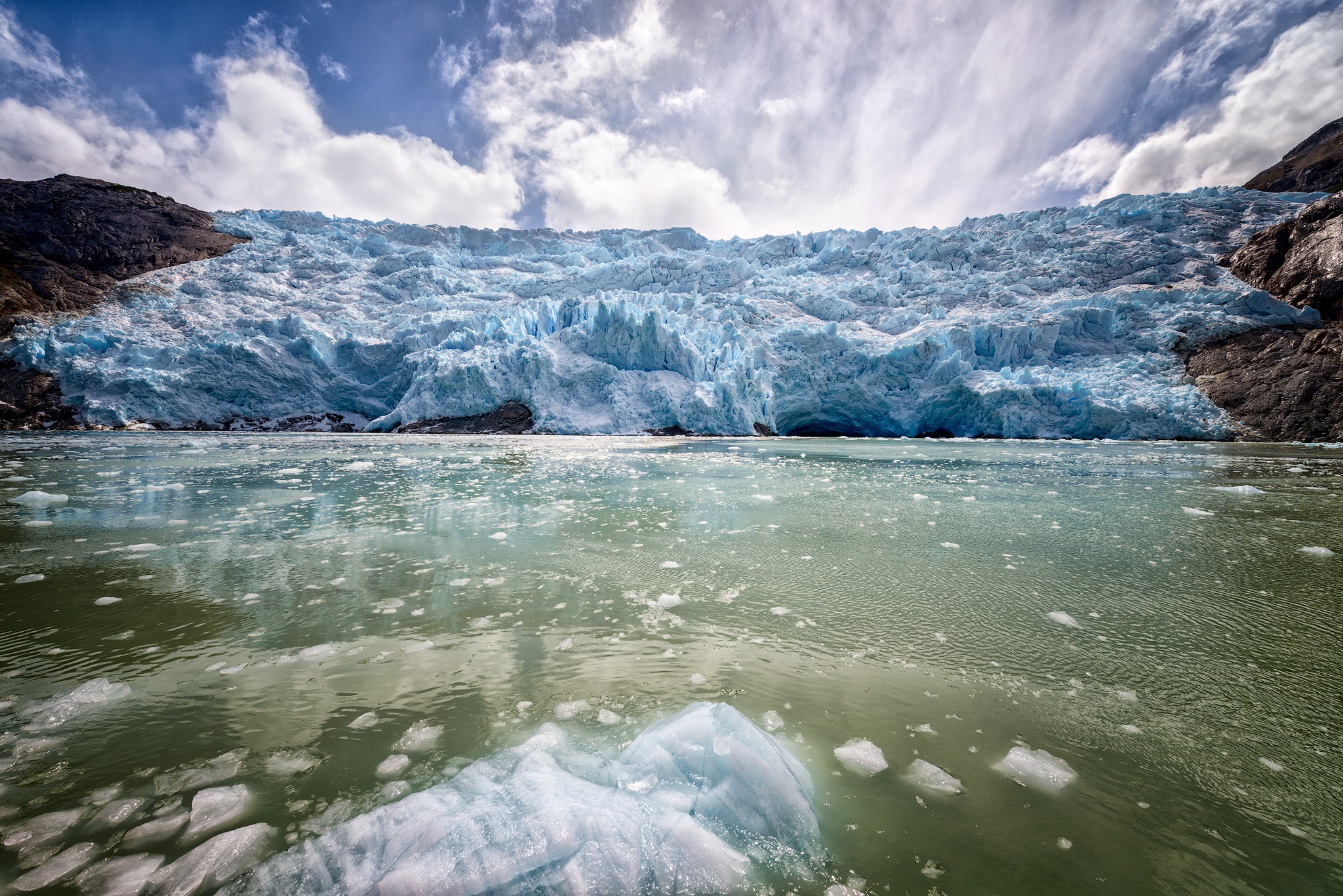
Grey Glacier · Chilean Patagonia
Series and projects
Portfolio
01
Instagram selection
Featured photographs
Torres del Paine National Park · Chilean Patagonia
Where the Sky Descends to the Rock
The Cuernos del Paine appeared covered by thick clouds, as if the sky had descended and remained suspended over their walls. The faint, warm light barely brushed the rock and snow before disappearing once more into the mist.
There was something deeply unsettling in that scene. The Cuernos never revealed themselves completely: they emerged in fragments, between veils of mist, as if the landscape were choosing how much to show and how much to keep to itself.
I stood watching that play of appearances and concealments. The mountain was there, immense and still, yet it seemed to change with every second. One cloud covered a summit, another revealed a ridge, and for brief moments the light opened small wounds in the shadow.
It was as if the landscape were breathing before me. And the Cuernos, firm in the midst of it all, silently held the weight of that sky.
Torres del Paine National Park · Chilean Patagonia
Where the Sky Collapses
Above the mountains of Torres del Paine, the clouds seemed to have lost all intention of continuing on their way. They piled up one upon another, immense and lit from above, while their shadows began to swallow the peaks.
There was something unsettling in that scene. The range, which so often seems indestructible, looked small beneath that immense sky. The snow, rocks and glaciers were barely visible among the clouds descending along their slopes.
I stood watching that enormous mass in motion. At times, the light opened small spaces between the shadows and revealed mountains that seemed to rise from the depths of the storm.
It was as if the sky were collapsing over Patagonia and the mountains were the only thing still able to hold it up.
Torres del Paine · Chilean Patagonia
Where the Earth Rises
There are mountains one can look at for hours without growing tired. This is one of them.
I am struck by the way rock and ice seem to compete for every corner. The enormous dark walls, the crevasses, the snow clinging to impossible slopes. Everything seems to be at its limit, and yet it has been there far longer than we can imagine.
When I made this photograph, I wanted to leave out anything that might distract from that immensity. Black and white allowed me to concentrate on the forms, the light and the force some mountains possess when they rise before us.
There is something about great peaks that has always moved me: their absolute indifference to our presence.
Torres del Paine · Chilean Patagonia · October 2014
And the Light Came Looking for the Mountains
It was an October morning in 2014. The sun was beginning to rise over Patagonia, and the Cuernos del Paine were receiving the first light of the day.
The sky still held the cold blue of night. Clouds crossed the summits as the immense granite walls began to turn red. The light moved slowly down the rock, leaving some faces alight and others completely in shadow.
I have seen many sunrises in the mountains, but that morning felt different. Perhaps it was the intensity of the colour, or the strange sensation of standing before a mountain that, for a few minutes, seemed to have a life of its own.
I made this photograph while the light changed from one instant to the next. Soon afterward, the sun continued to rise, the reds disappeared, and the mountains returned to their usual colours.
Twelve years have passed, and I can still see those illuminated walls against the blue sky.
Perhaps that is the most beautiful and terrible thing about light: it can set an entire mountain ablaze, knowing it cannot stay.
Torres del Paine · Chilean Patagonia
When the Light Reaches
The light reached the summits first. The Cuernos del Paine began to glow while the lake and forest still remained in shadow.
For a few minutes, the landscape seemed divided into two times. Above, the mountain received all the light. Below, the water waited and barely returned a trace of that colour.
I made the photograph from a distance. I did not want to bring the summits closer or separate them from what lay before them. The lake, the islands and the dark trees were also part of the scene: they showed how far the light had reached and everything it had yet to touch.
Then the colour began to withdraw. The walls slowly returned to stone and the sky was left empty above them.
But for an instant the mountains burned without burning, as if all the light of the day had climbed there to say goodbye.
Torres del Paine · Chilean Patagonia
Two Mountain Ranges
In this image, the ice of Grey Glacier seems to repeat the shapes of the mountains. In the foreground, points, ridges and white walls rise. Behind them, the rock continues the same drawing.
Black and white removes the distance that normally separates the two planes. For a moment, it is difficult to tell where the glacier ends and the mountain range begins.
There was a mountain of stone before us and another, more fragile one, forming upon the ice. One had stood there for millions of years. The other could change within hours.
I looked at the scene for a while before understanding what held me there. It was neither the mountain nor the ice on its own. It was the way they repeated each other, as if the glacier had learned from the summits before it.
And then I saw that the mountains did not end in the rock: they continued rising in the ice, even as the ice began to disappear.
Grey Glacier · Chilean Patagonia
Architecture of Ice
Grey Glacier, located in Torres del Paine National Park, is part of the Southern Patagonian Ice Field. It is about 28 kilometres long and 6 kilometres wide, ending in three large fronts that flow into Grey Lake.
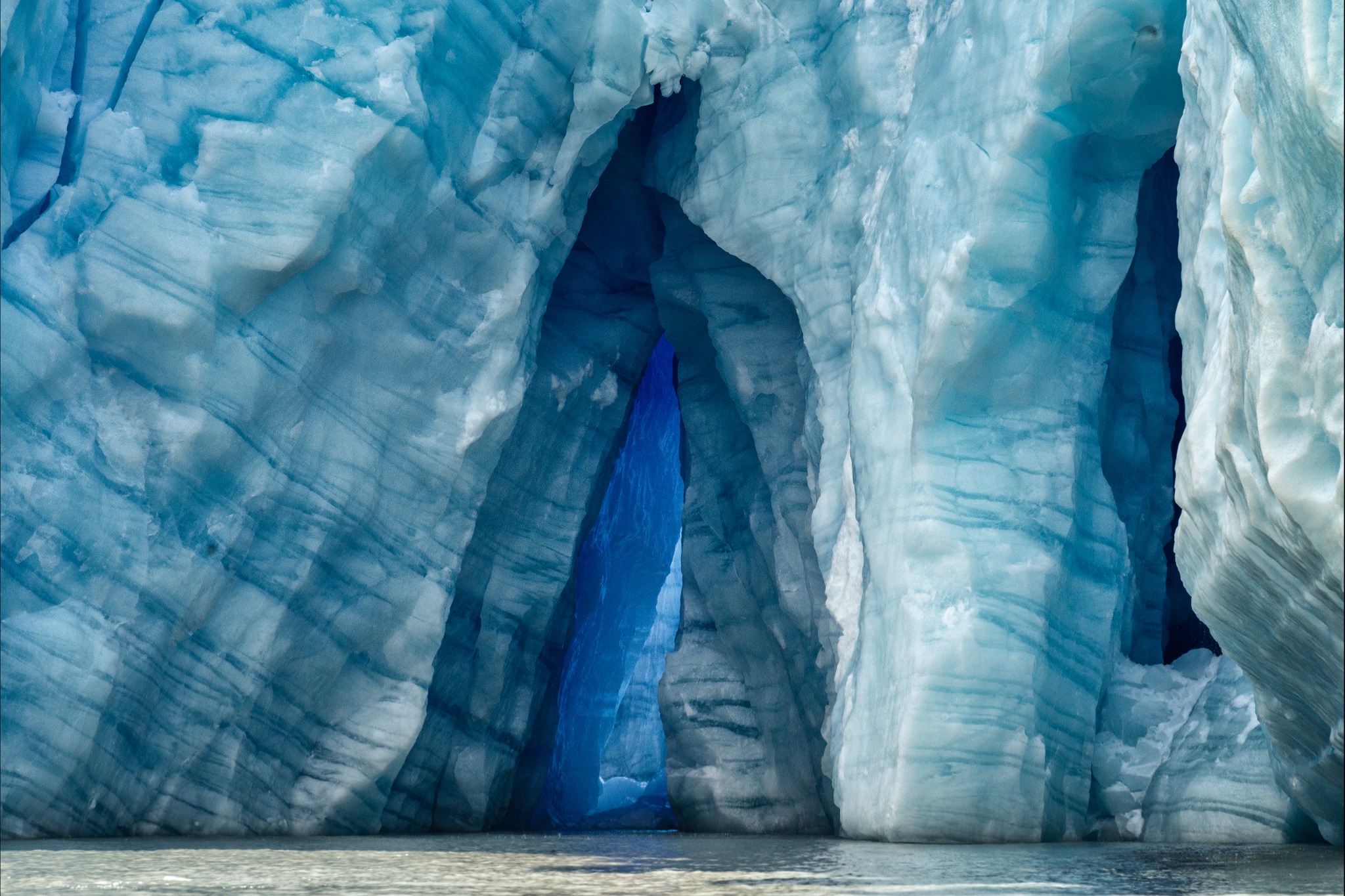
Its intense blue colour comes from the enormous pressure accumulated over thousands of years. The weight of successive layers of snow expels air bubbles and forms extremely compact ice. As light passes through it, much of the red spectrum is absorbed while blue reaches our eyes with greater intensity.
In this photograph we were able to come close enough to appreciate astonishing details, including this blue cavern: one of the glacier’s most fascinating forms.
I remained before those forms for a long time. The ice still seemed to be doing something: opening doors, raising walls, letting light pass through. I understood that I was not photographing a cavern, but time working from within. That is Loquium for me: to stop hurrying the landscape until, somehow, it begins to speak.
Grey Glacier · Chilean Patagonia
Ice upon Ice
This is another section of the Grey Glacier wall. Here the ice ceases to look like a surface and rises into cavities, columns and passageways. Light enters through the cracks and turns everything it touches blue.
There was ice upon ice. Ancient snowfalls pressed against one another. Winters that took place long before us were still there, holding up those forms.
I looked at the wall and for a moment felt I was standing before the ruins of something that had not yet finished being built. The glacier opened rooms and closed them. It raised its walls and began to tear them down. No form was final.
Then I understood that ice does not preserve time: it pushes it towards us. Every crack, every hollow, every blue column was a part of that time coming into the light.
I stayed there, before the Grey wall, while the ice slowly did its work. I was only trying to listen.
Grey Glacier · Chilean Patagonia
Unnamed Range
The Grey wall rose before us once again. This time I saw no doors or rooms. I saw a mountain range born within the glacier: white summits, ridges and towers that seemed to reach for the sky.
Clouds passed behind the ice and at times everything assumed an impossible scale. There were no trees, animals or people against which to measure those forms. Only whiteness rising against the dark.
Each tower held both the force that had raised it and the fall that would one day erase it. The glacier built upwards while time worked silently from below.
I thought of all the mountains we have looked upon as if they were eternal. They too rise, fracture and disappear. They too are still happening.
I made the photograph as light travelled across the summits of ice. Before that unnamed range, for an instant, everything seemed to be coming into being.
02
Portfolios disponibles
An entry into bodies of work developed as independent projects: from Antarctic ice and the mountains of Torres del Paine to unexpected encounters with wildlife.
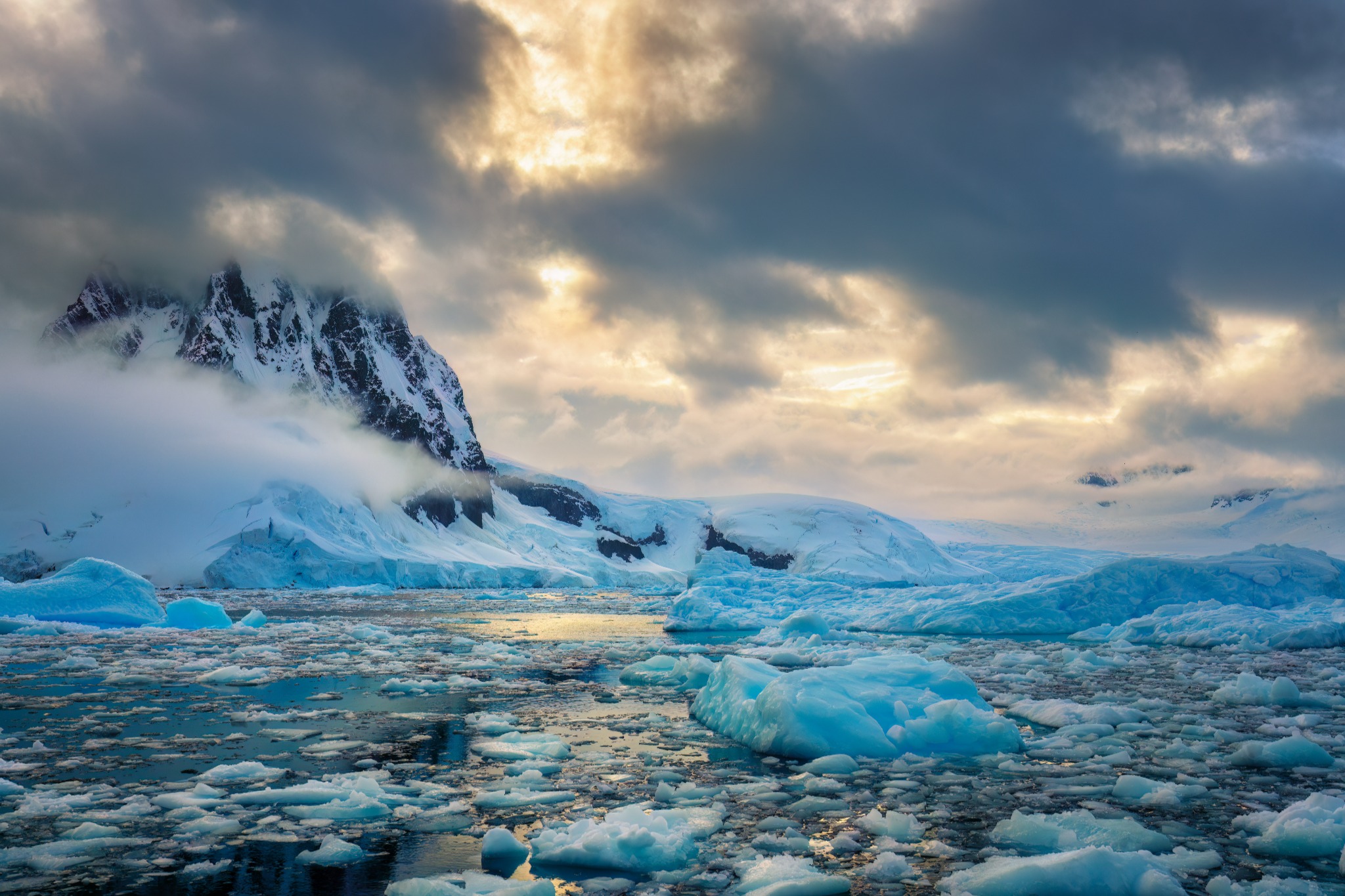
Project 01 · Antarctica
Beyond Time
A visual journey into a landscape where time appears written in ice, mist and sea.
View portfolio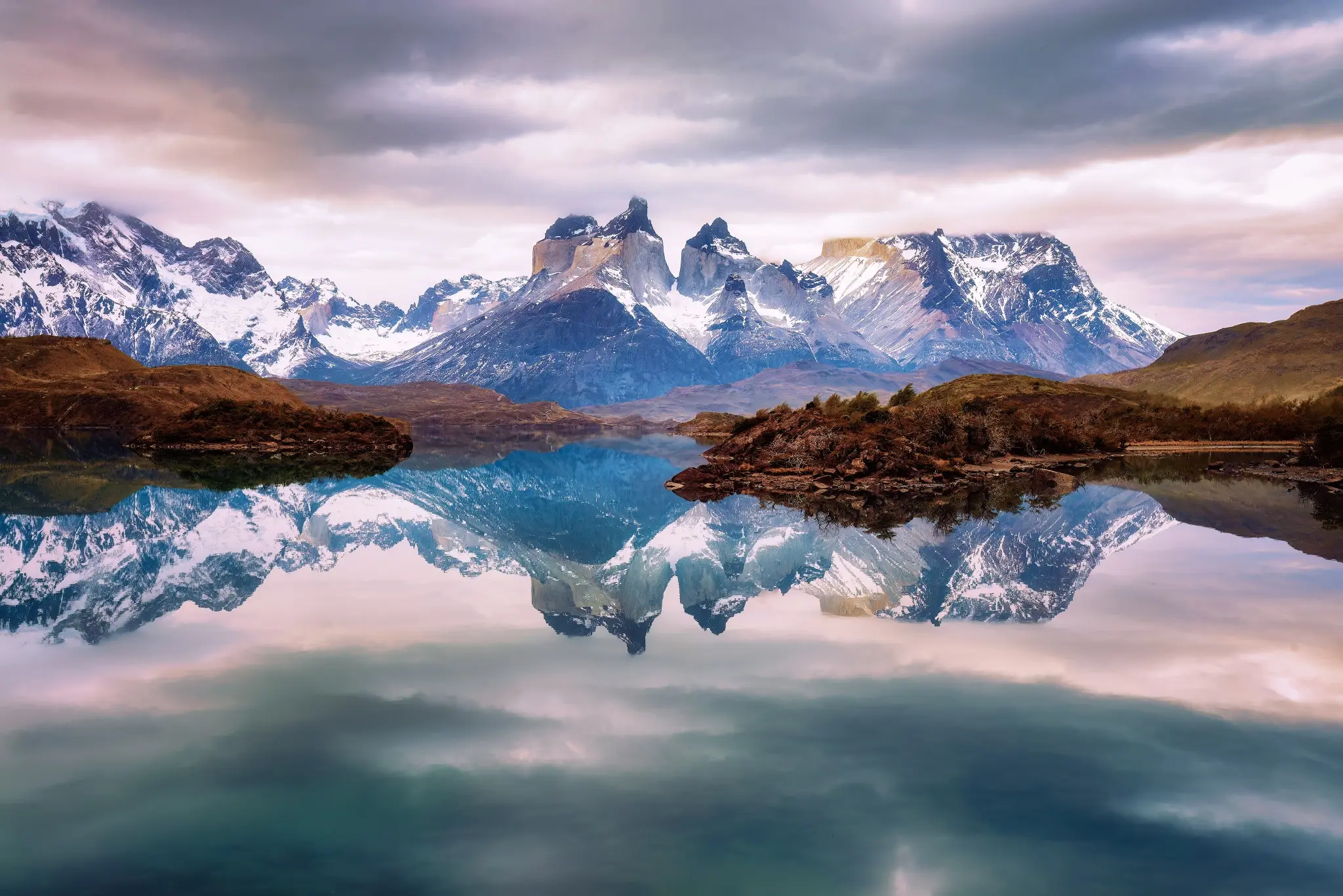
Project 02 · Torres del Paine
Torres
del Paine
A visual journey through a landscape where stone, water and light seem to hold time still.
View portfolio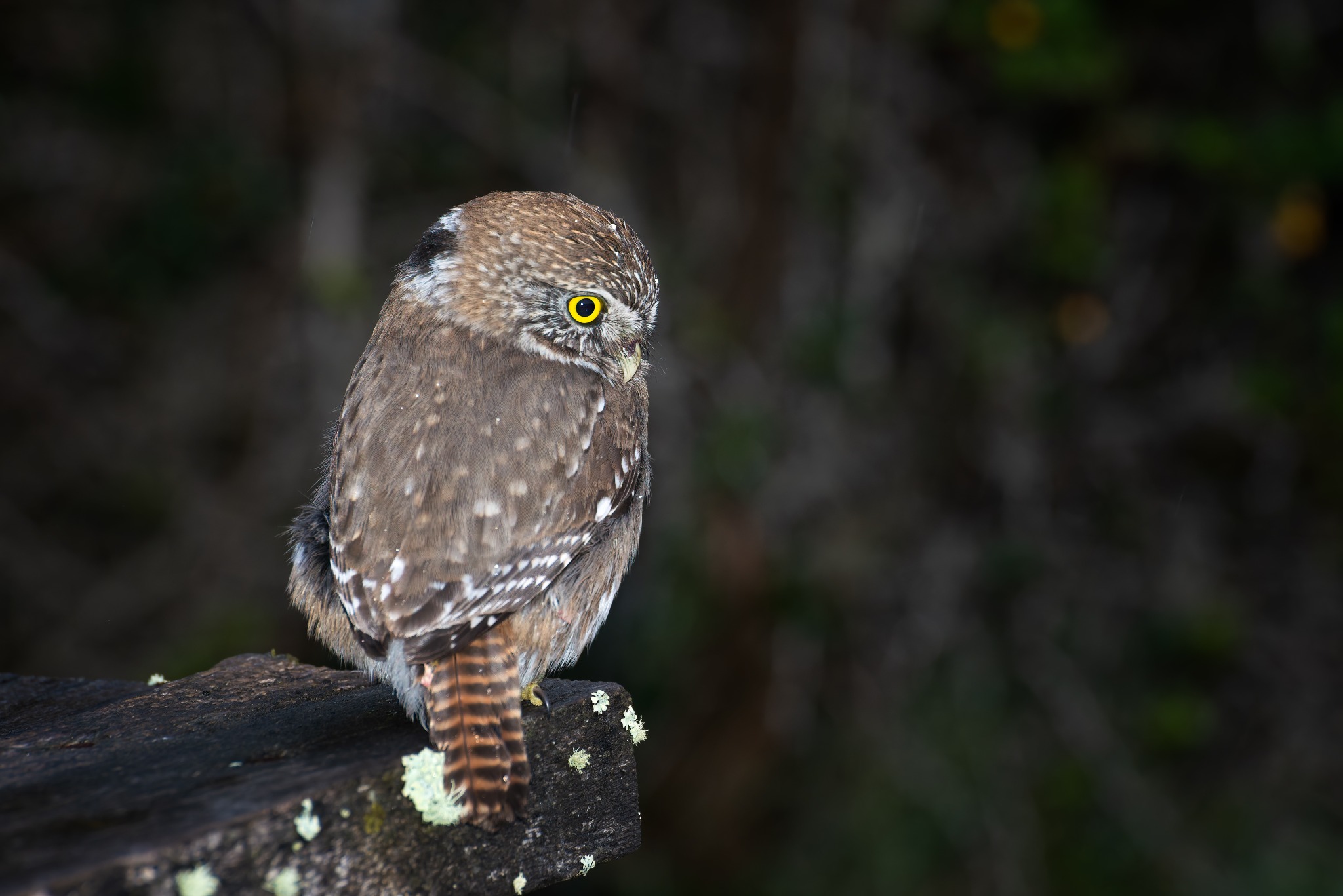
Project 03 · Wildlife
The life
that appears
Unexpected encounters with the life that inhabits the landscapes I travel through.
View portfolio“Let yourself go, look into the distance, play with every element the landscape offers, be moved, marvel... feel the hair rise on your skin when you are there, want to continue, enjoy the tiredness... that “pleasant feeling of fatigue”, feel yourself slowly merging with the landscape, shake everything off, be yourself, delight like a child... only then might we have a chance to convey emotion through our images.”
GVIVANCO