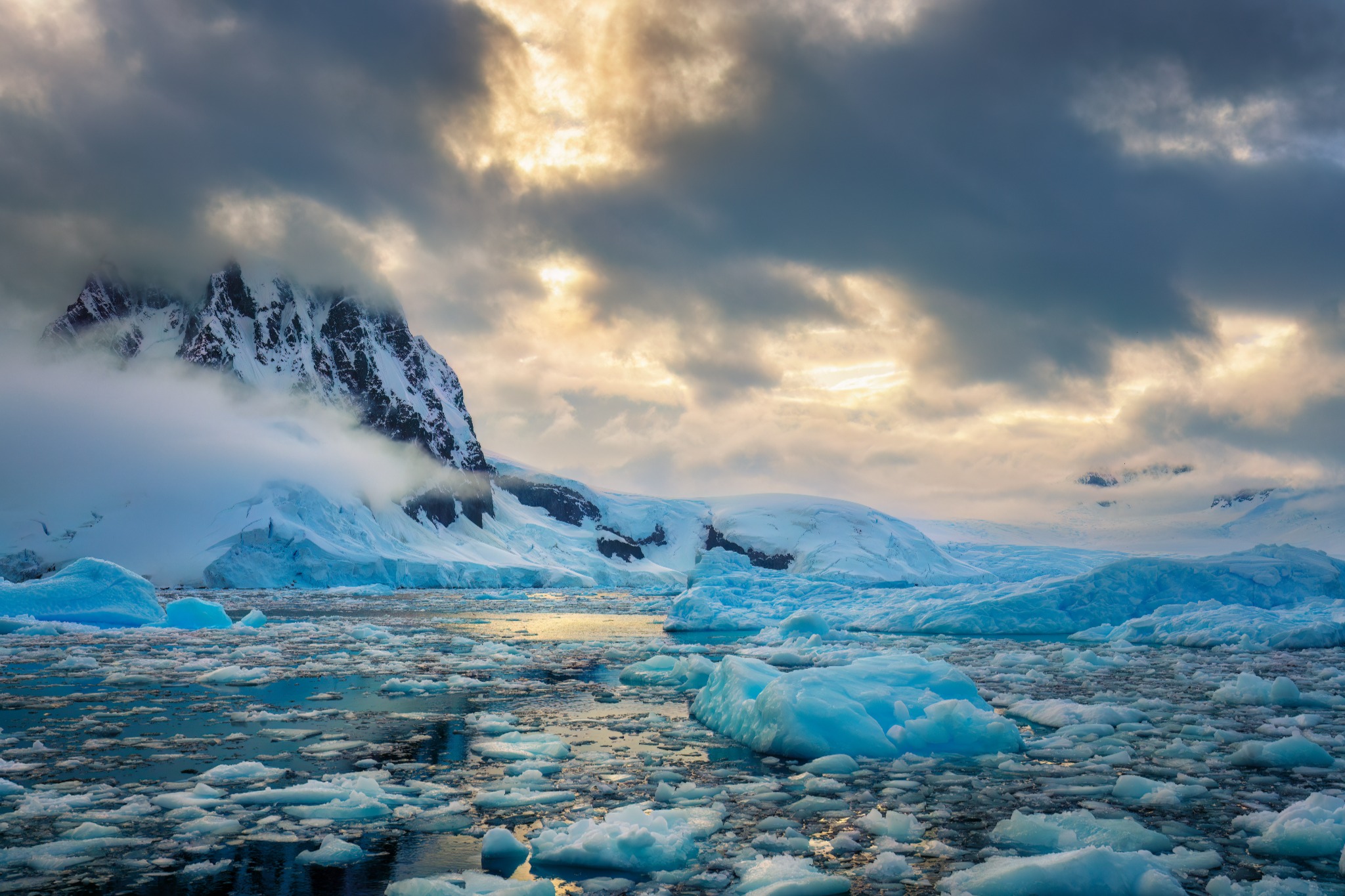
Photographic
series
A selection of projects developed as independent bodies of work. Each series proposes a different way of entering the landscape.
A way of looking at the world
A Chilean photographer whose work explores landscape as a form of thought. His images arise from a direct relationship with mountains, ice, water, wind and places where nature makes the passage of time visible.
Rather than describing geography, his work seeks to understand how landscape transforms our gaze and reveals something about ourselves.
Meet the artist →“To photograph is to enter silence until the landscape breaks within us. The image is born from that fracture: not to explain the world, but to let it speak.”GVIVANCO
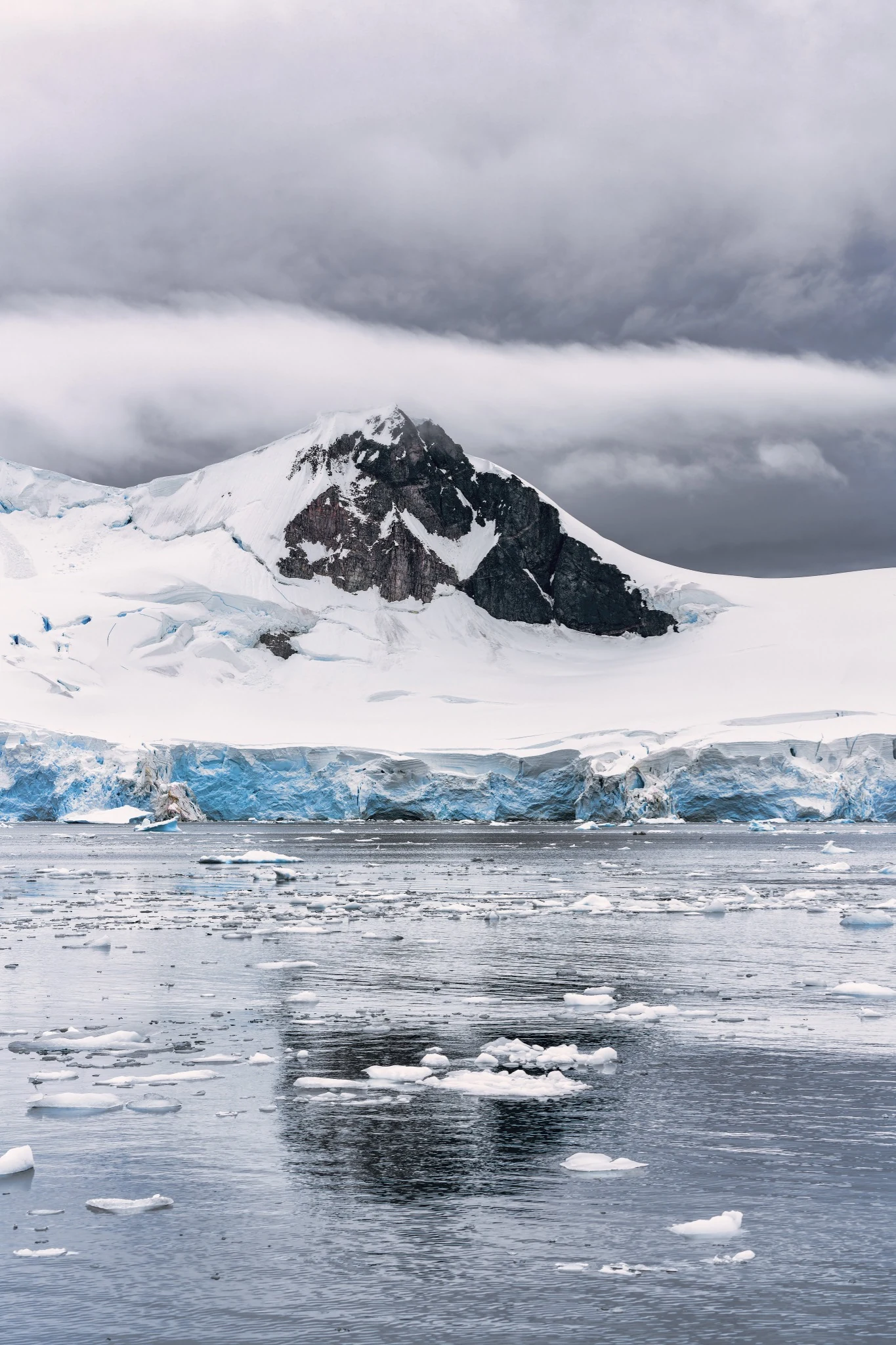
Beyond
Time
A personal expedition into a landscape where time becomes visible.
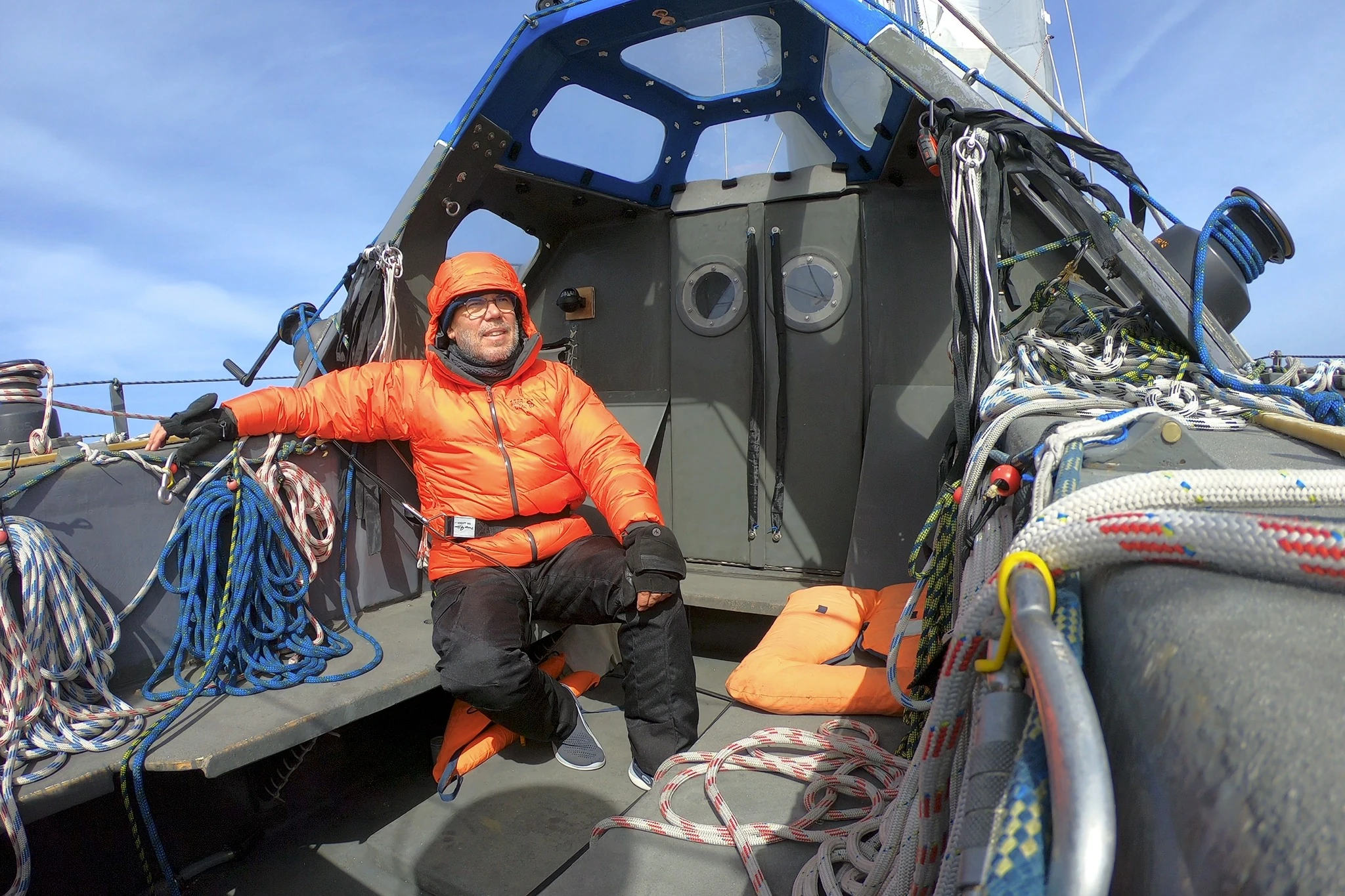
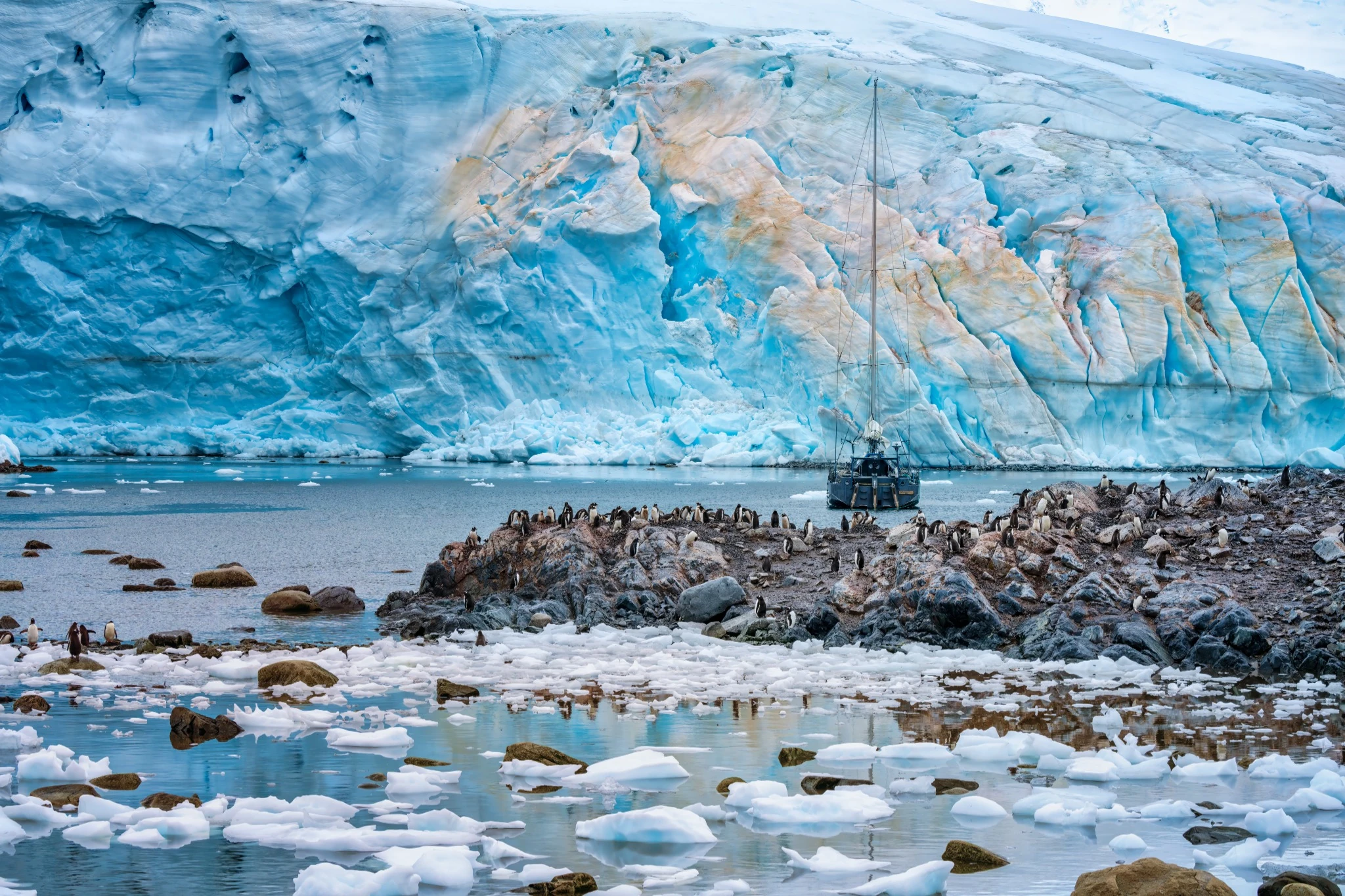
In February 2023 we sailed from Puerto Williams aboard the sailing yacht Sonabia II. After crossing the Drake Passage we reached the Antarctic Peninsula, a landscape so immense and primordial that at times it seemed to exist outside the world. We spent twenty-six days at sea and, on returning, I understood that there are landscapes from which one never fully comes back.
I did not go only in search of photographs. I went towards a landscape where time could be read.
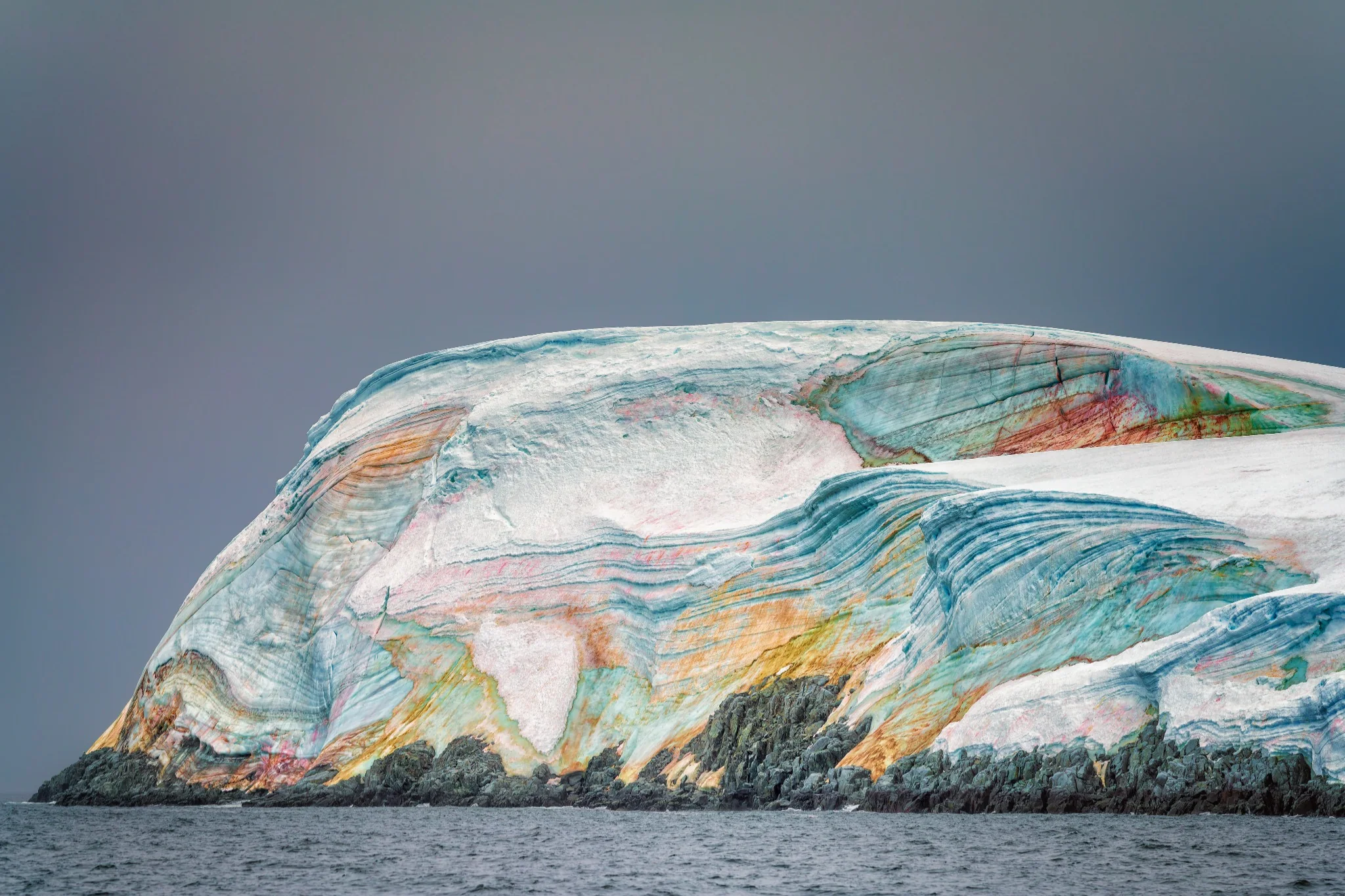
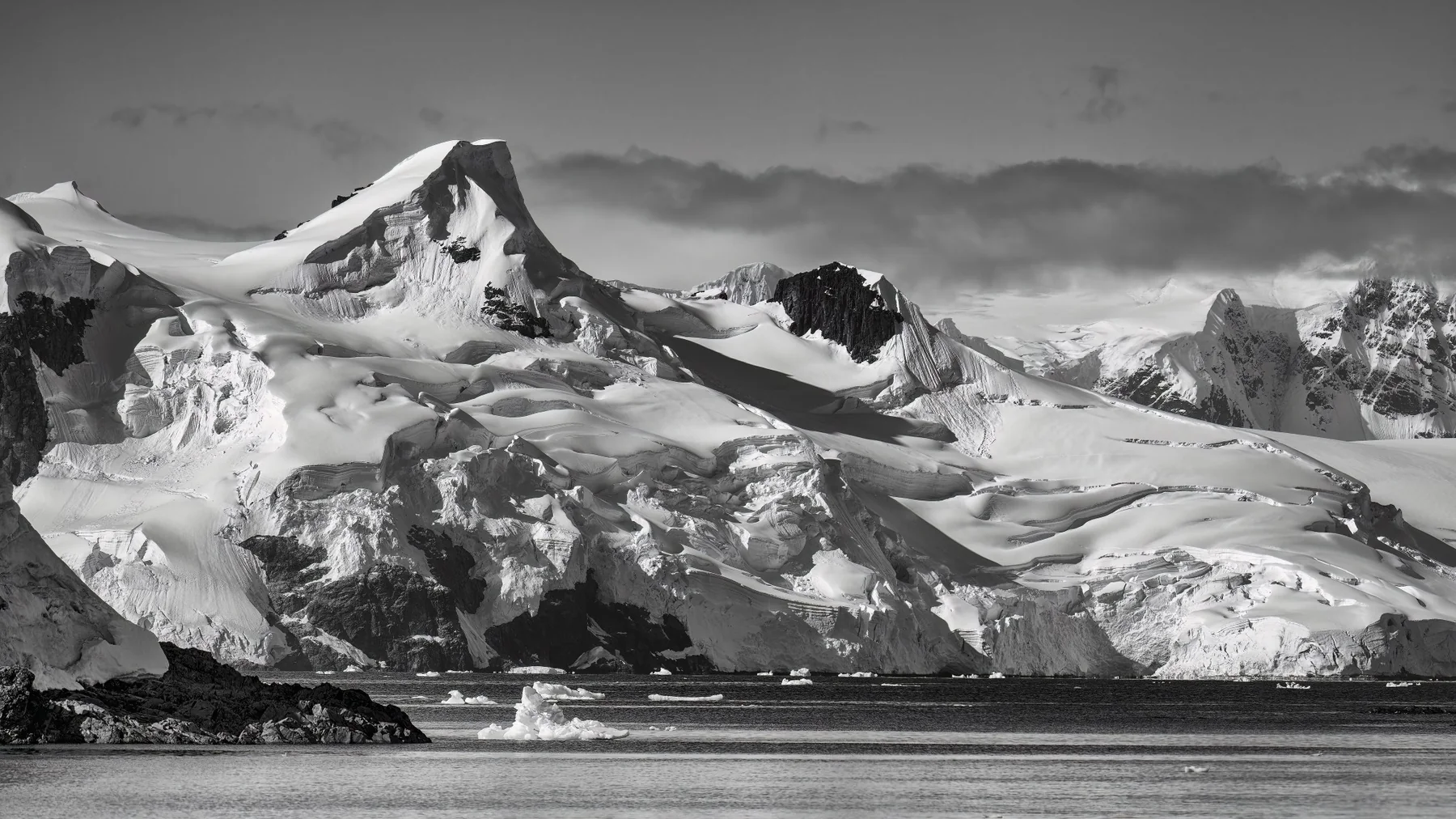
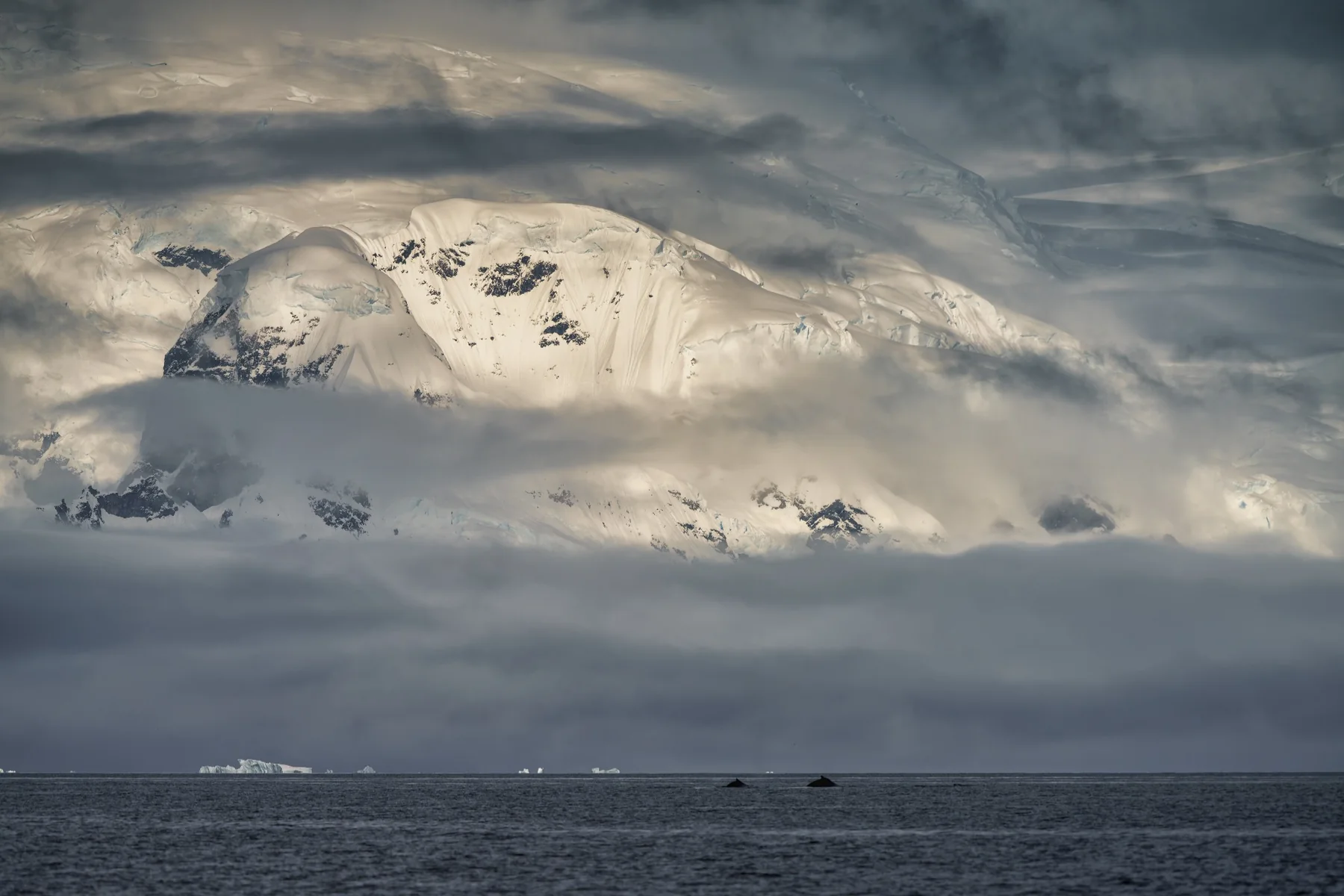
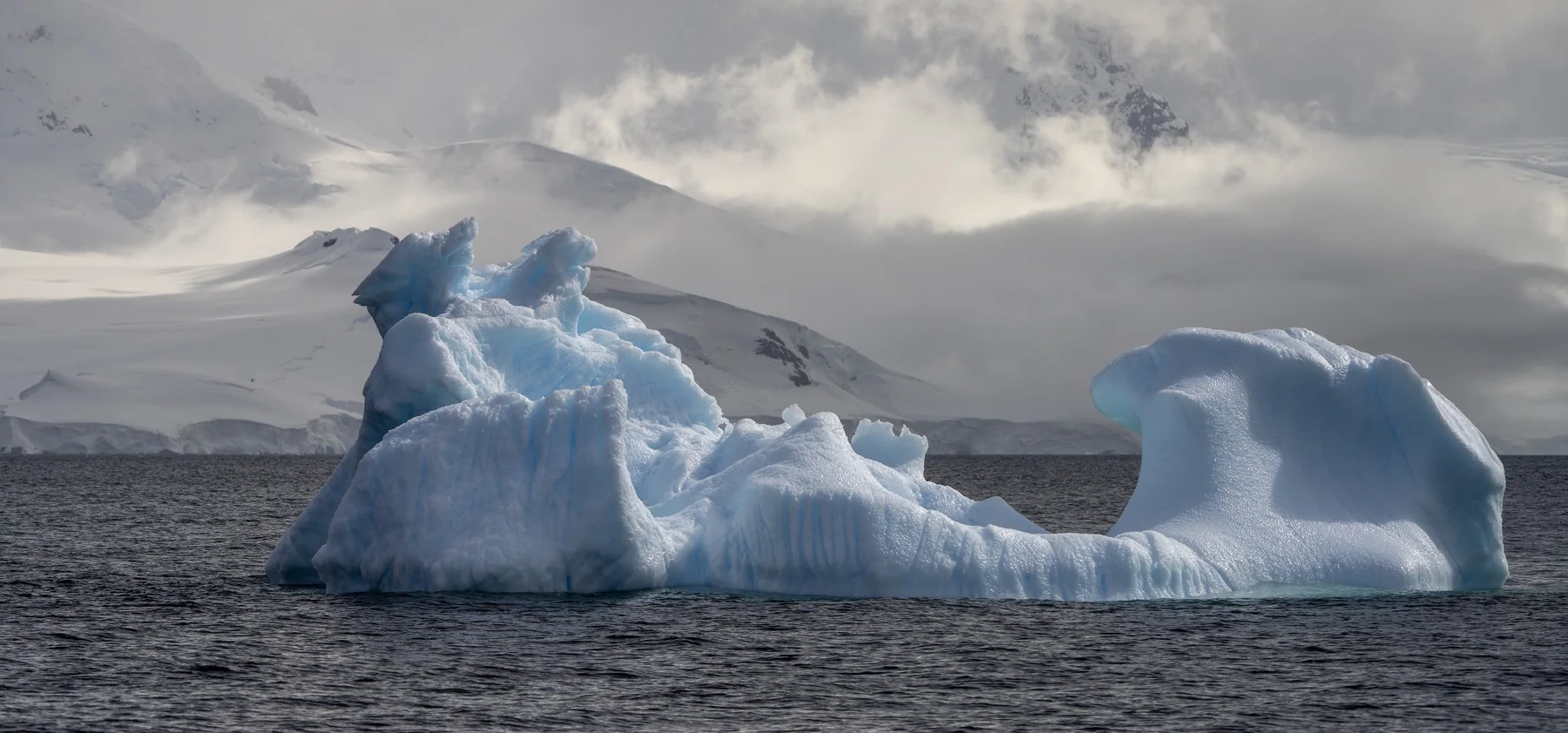
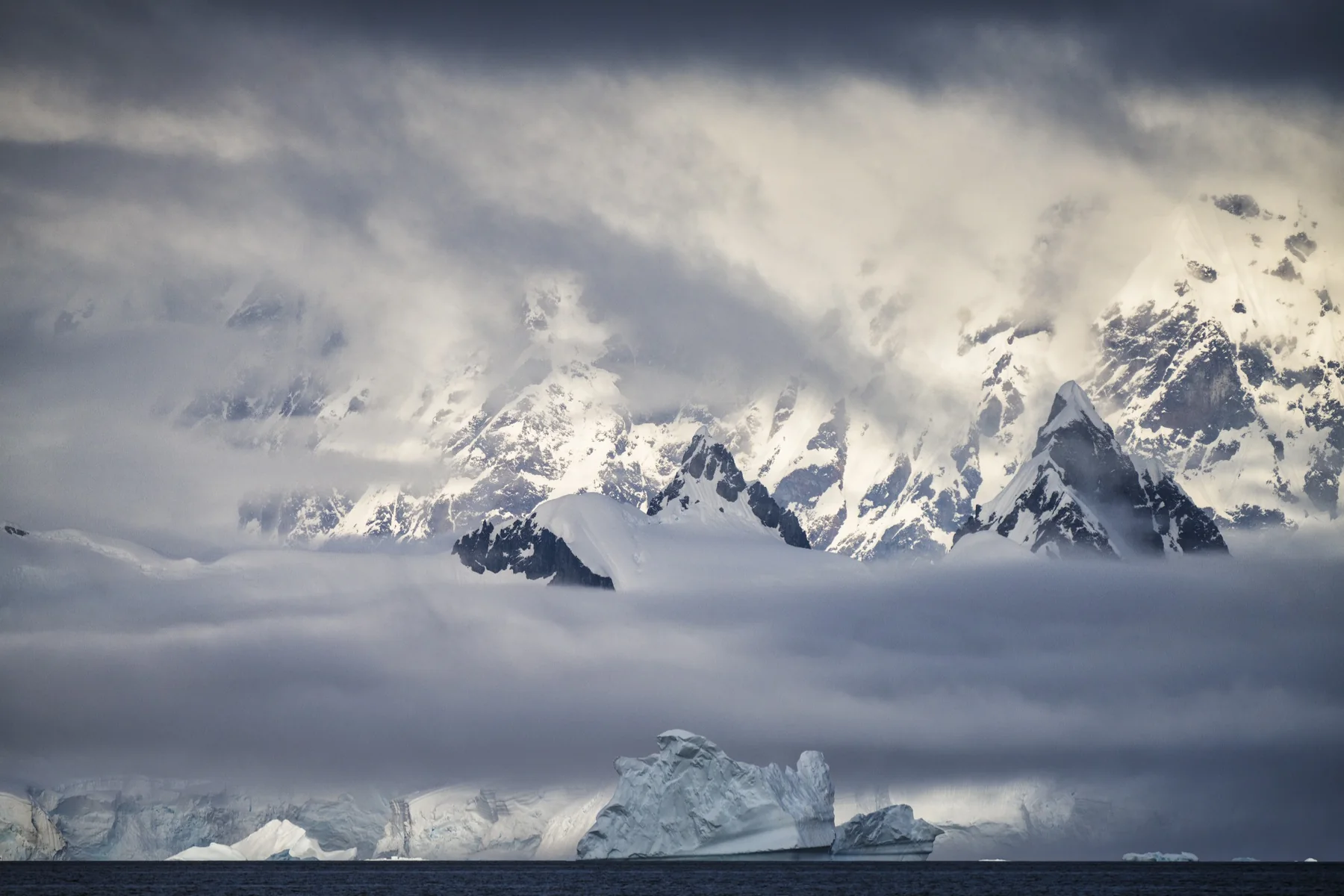
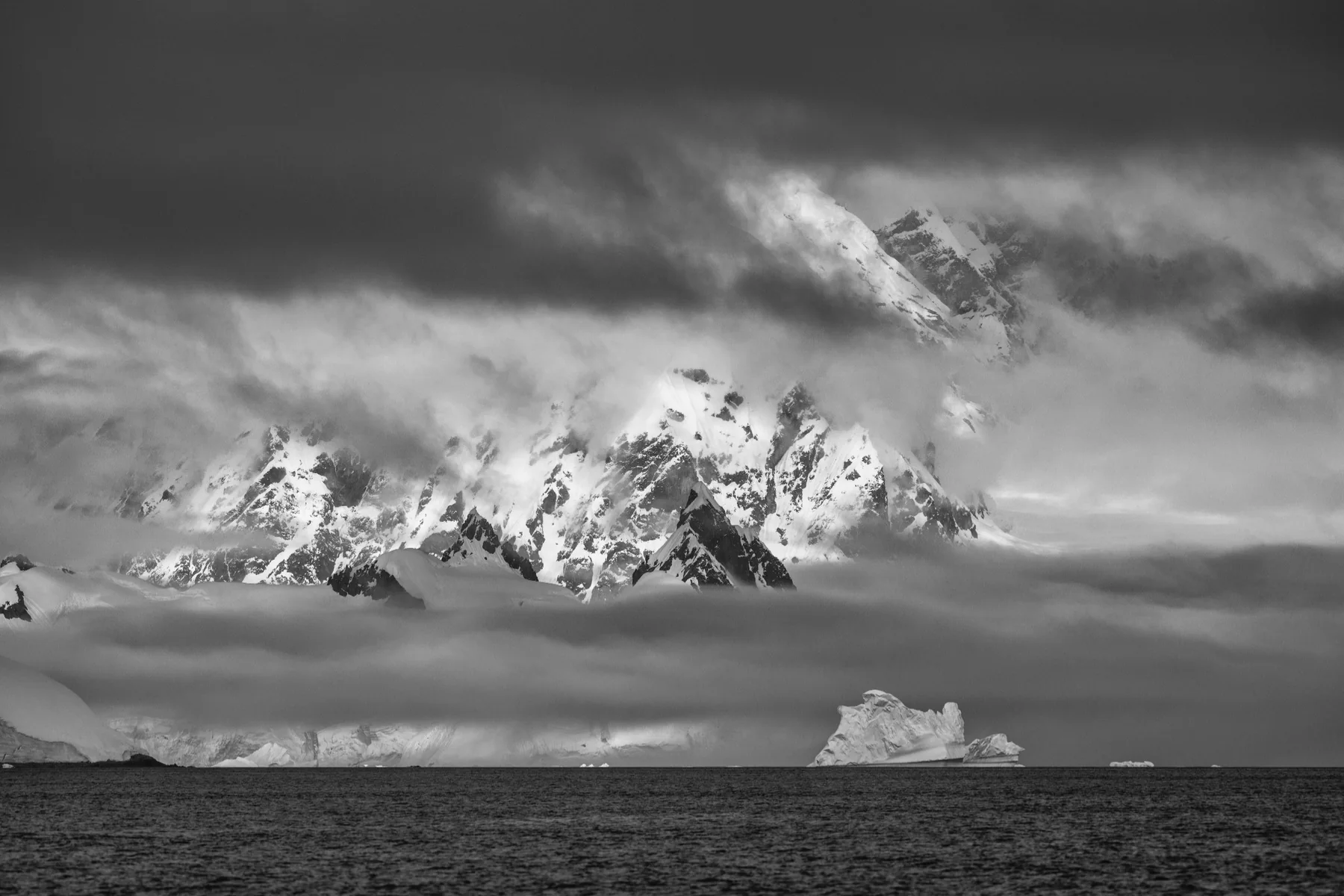
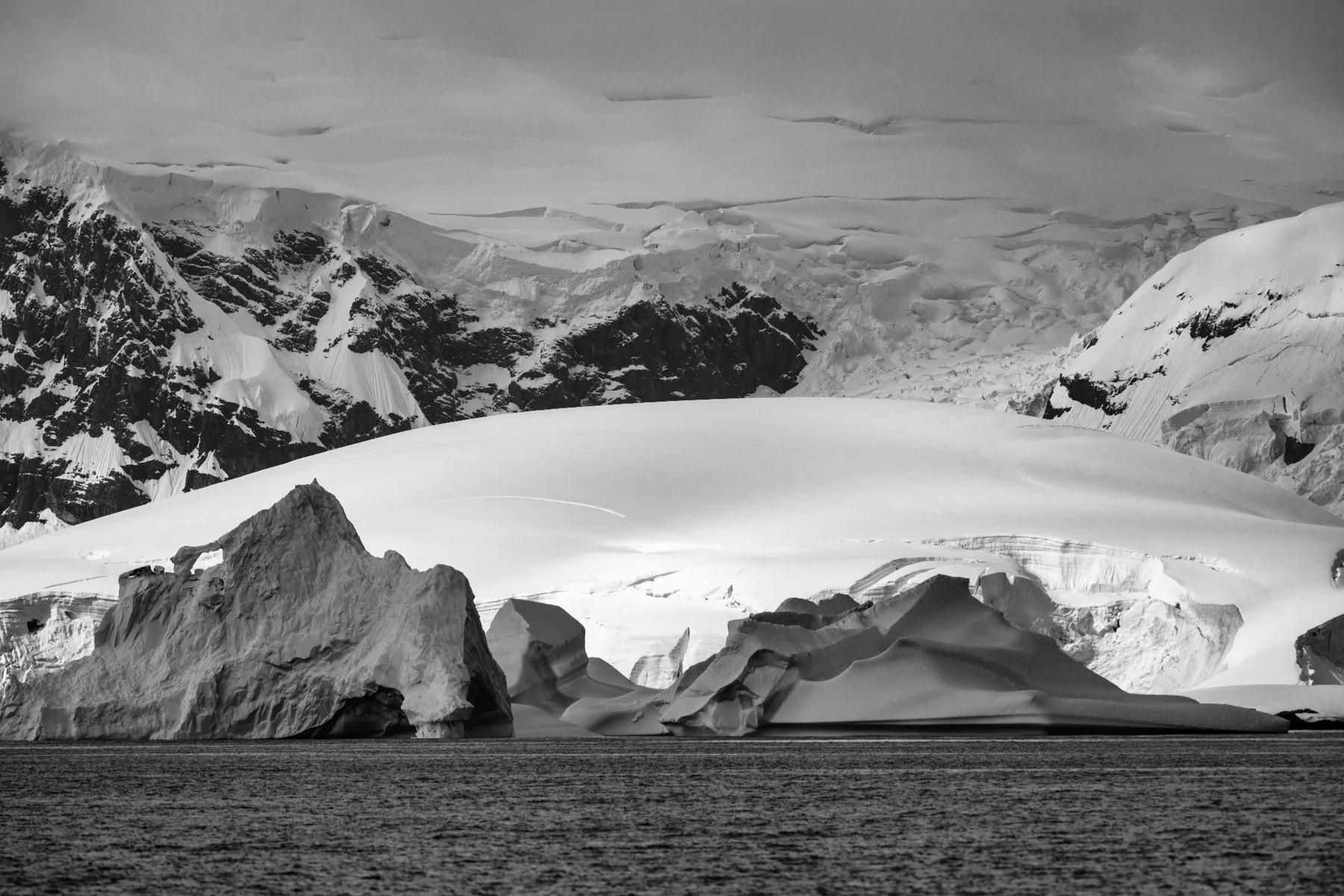
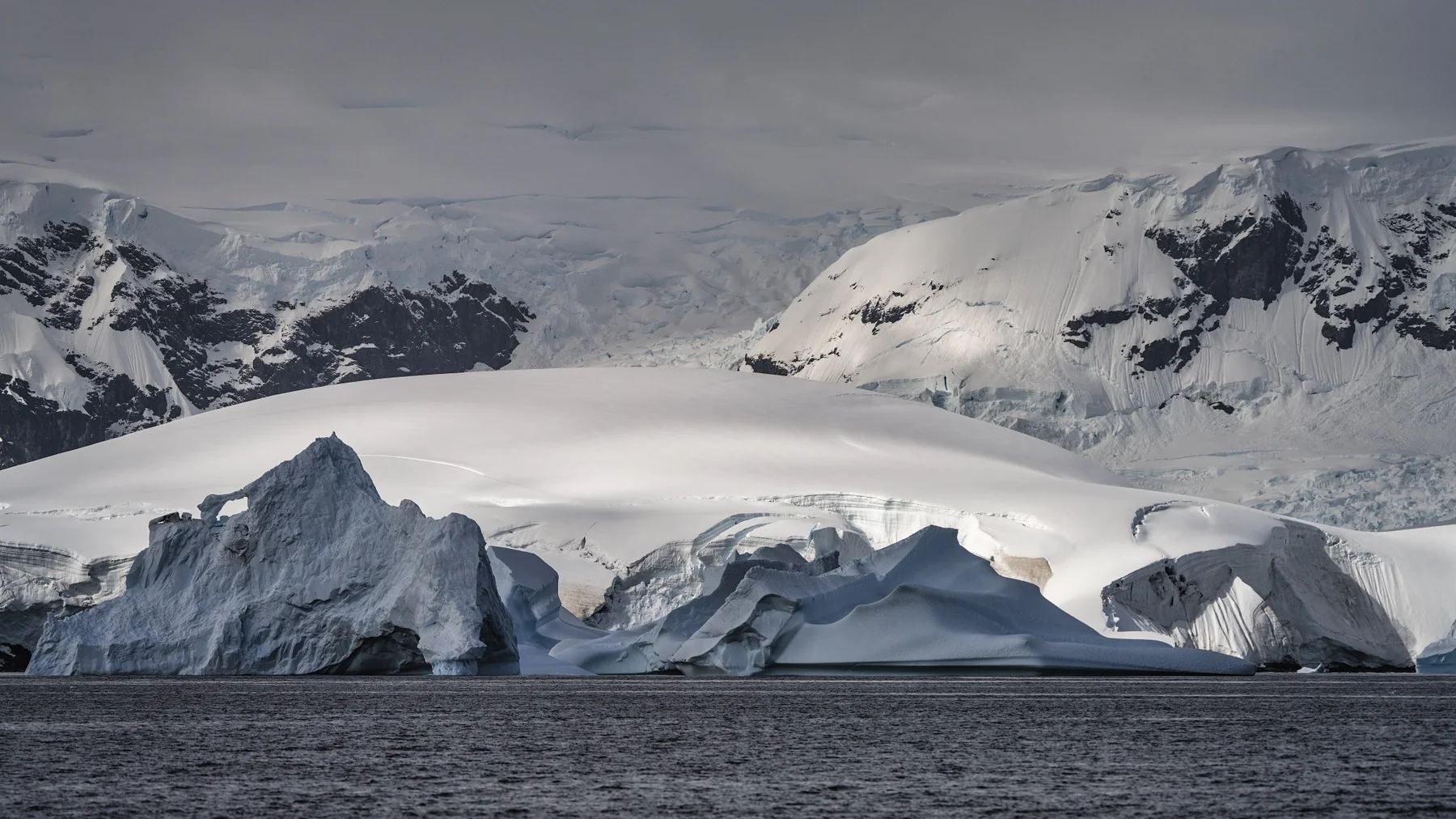
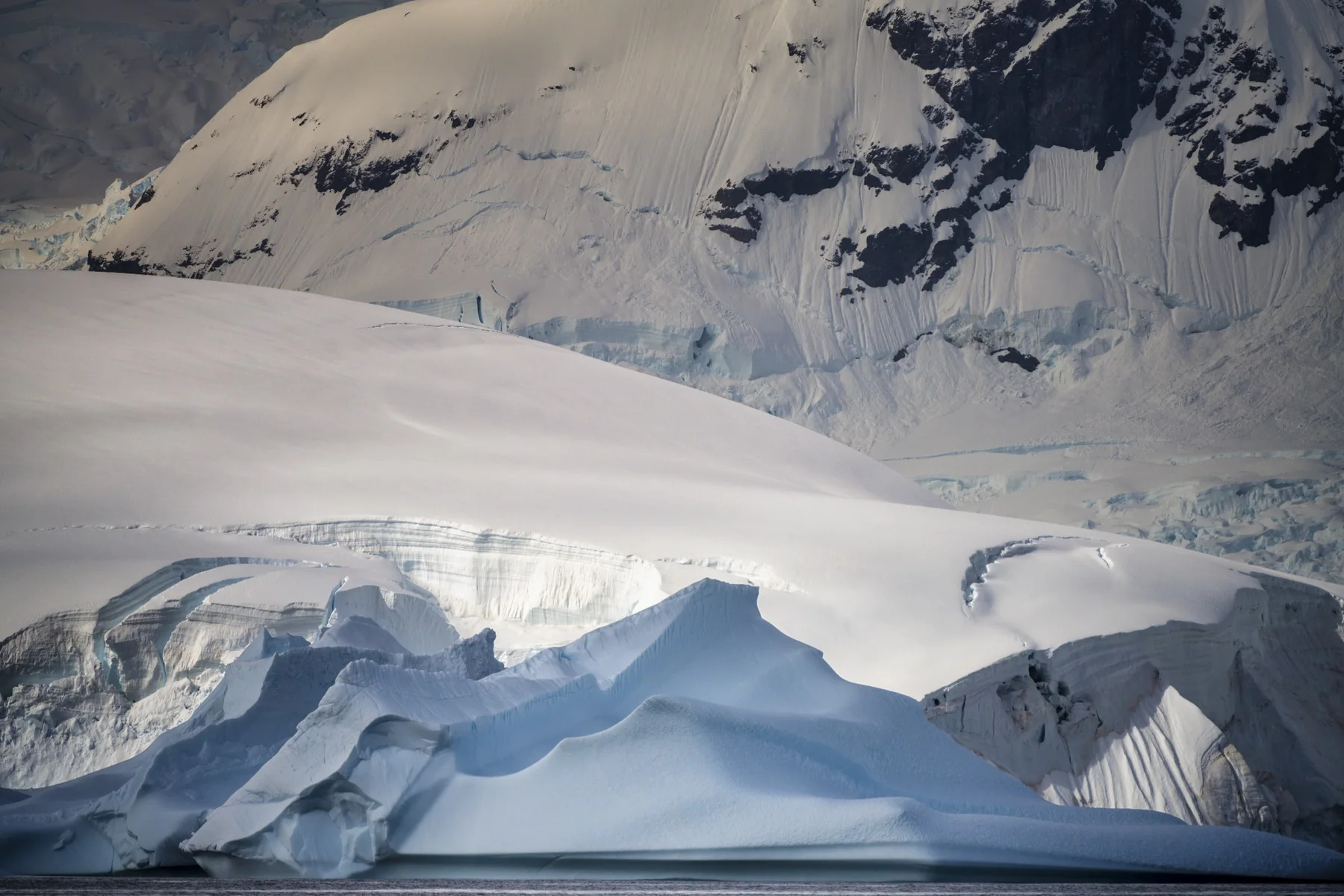
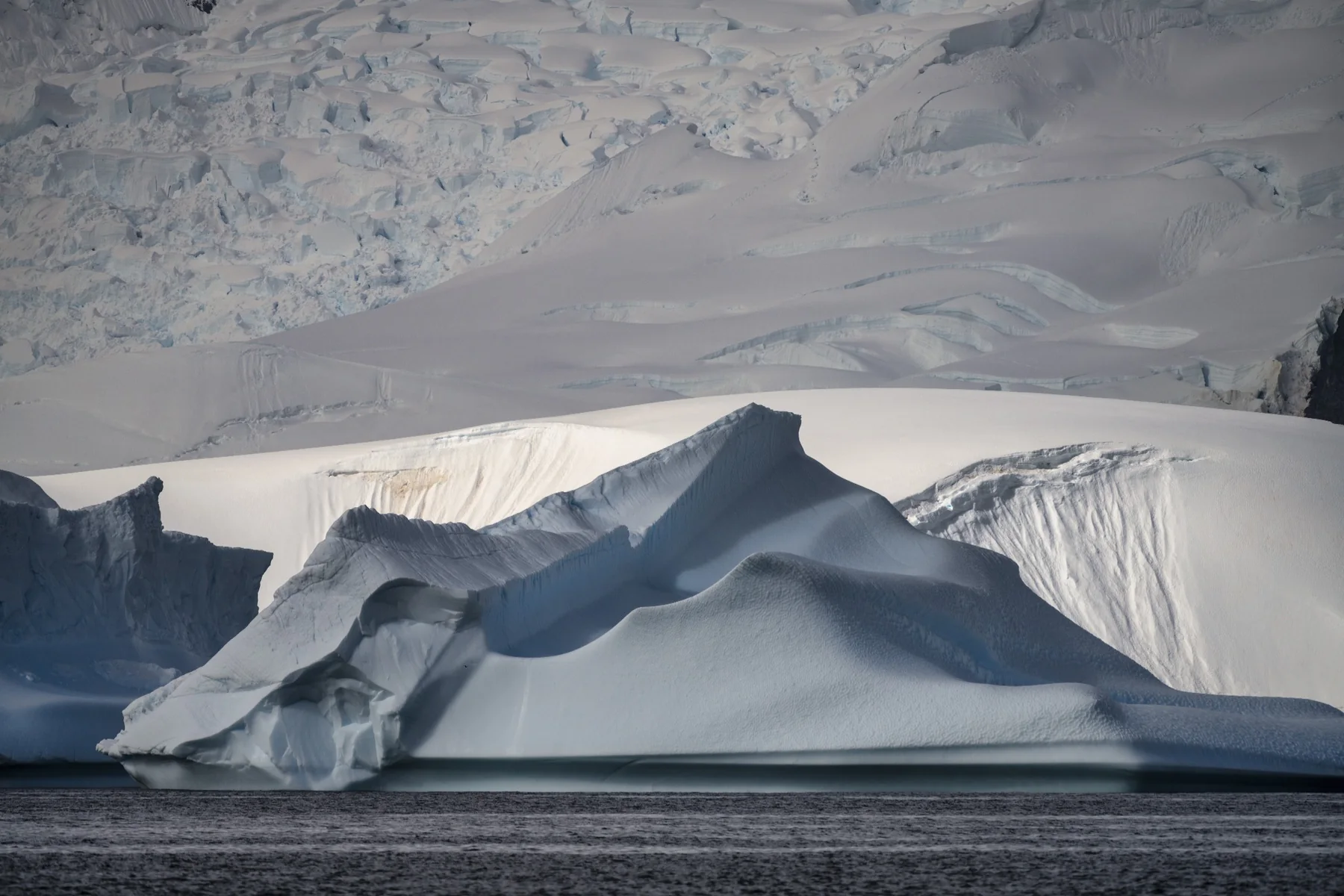
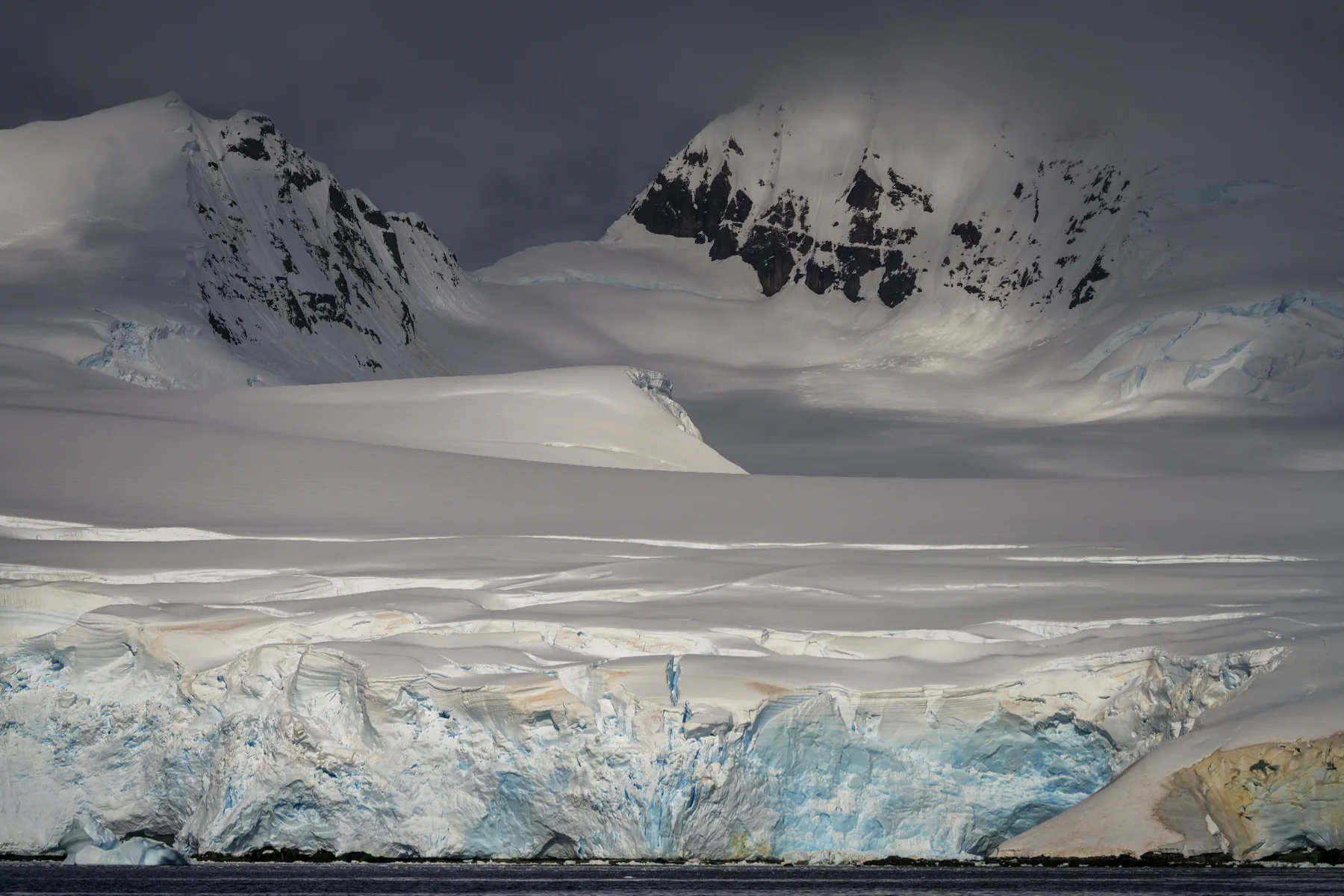
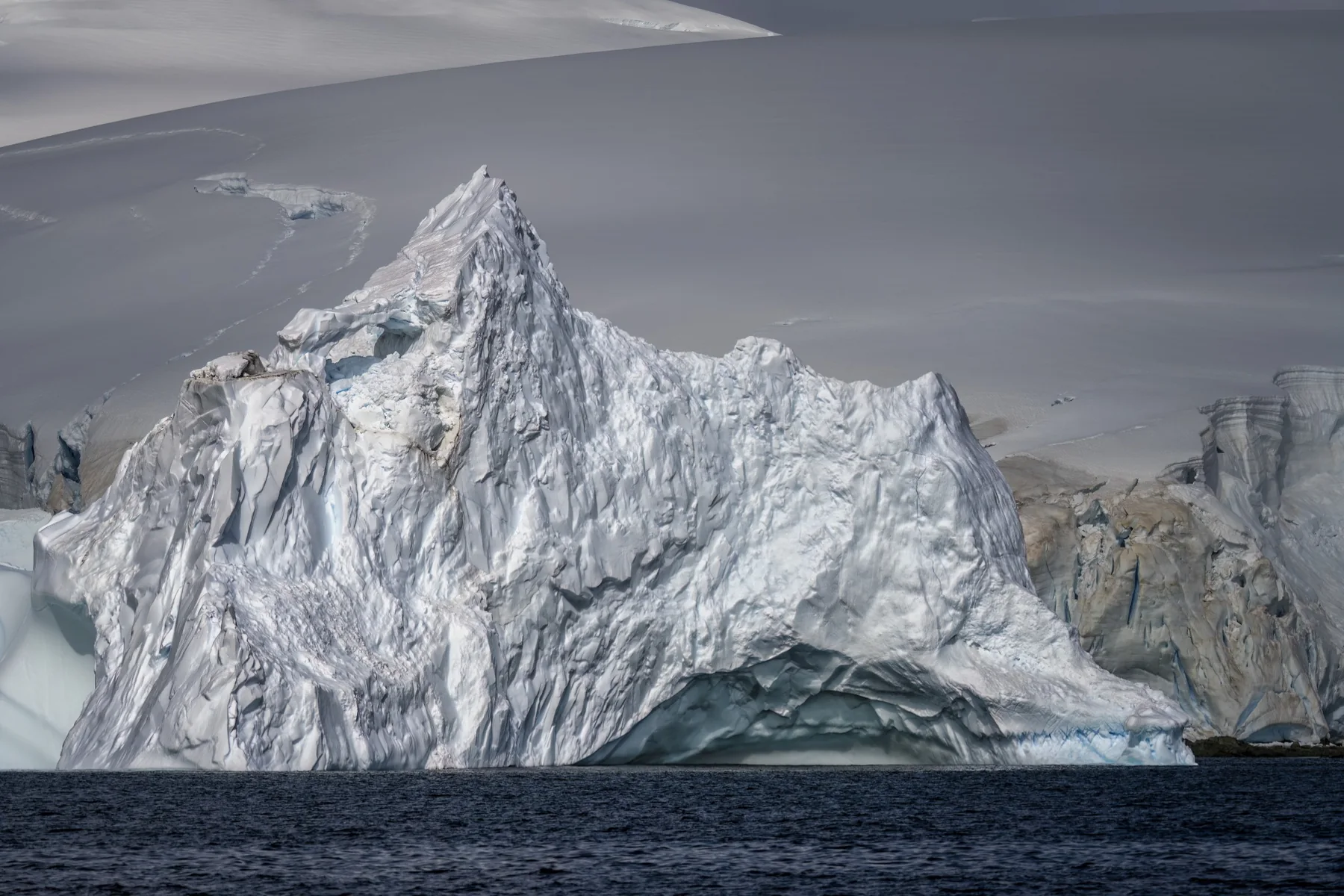
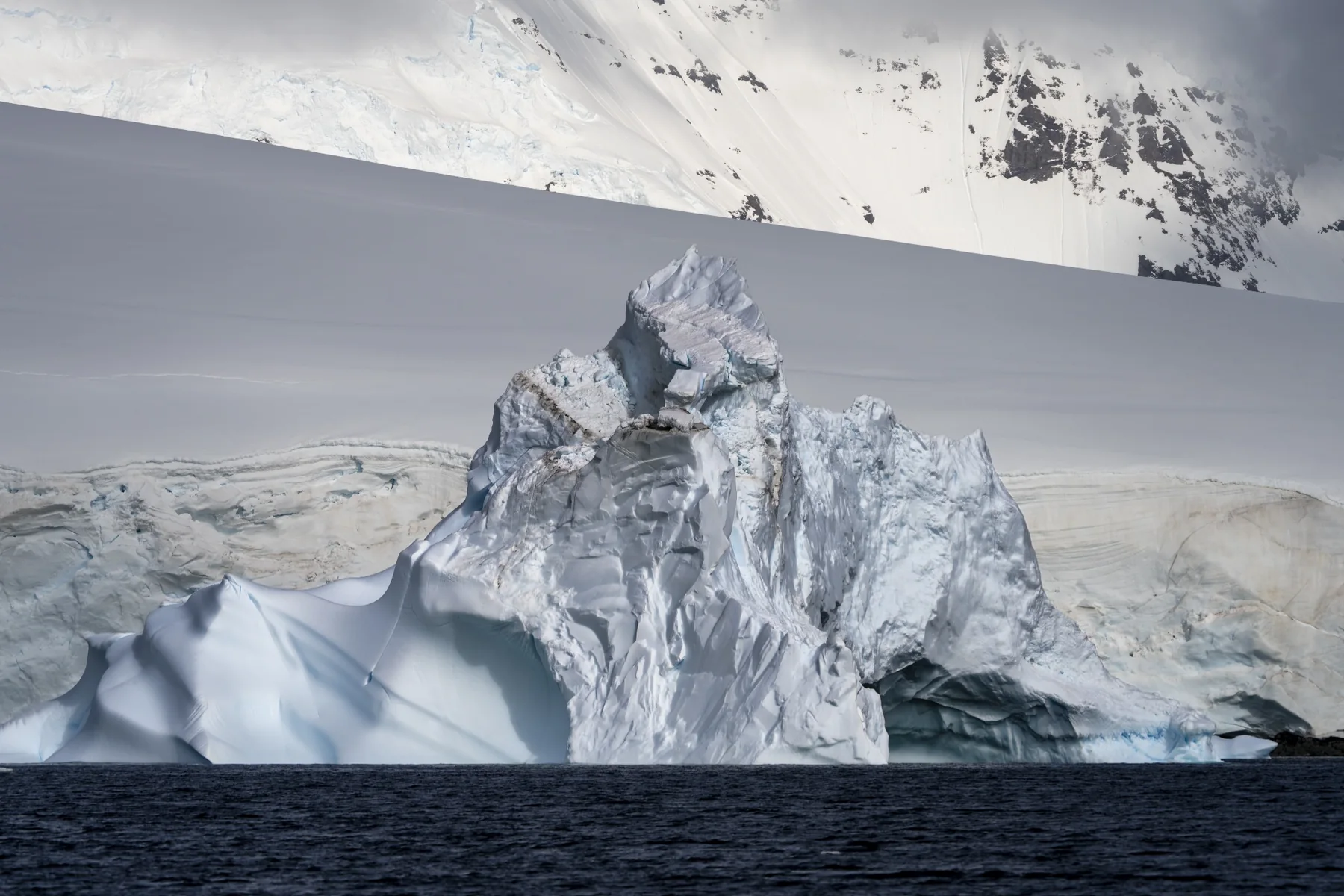
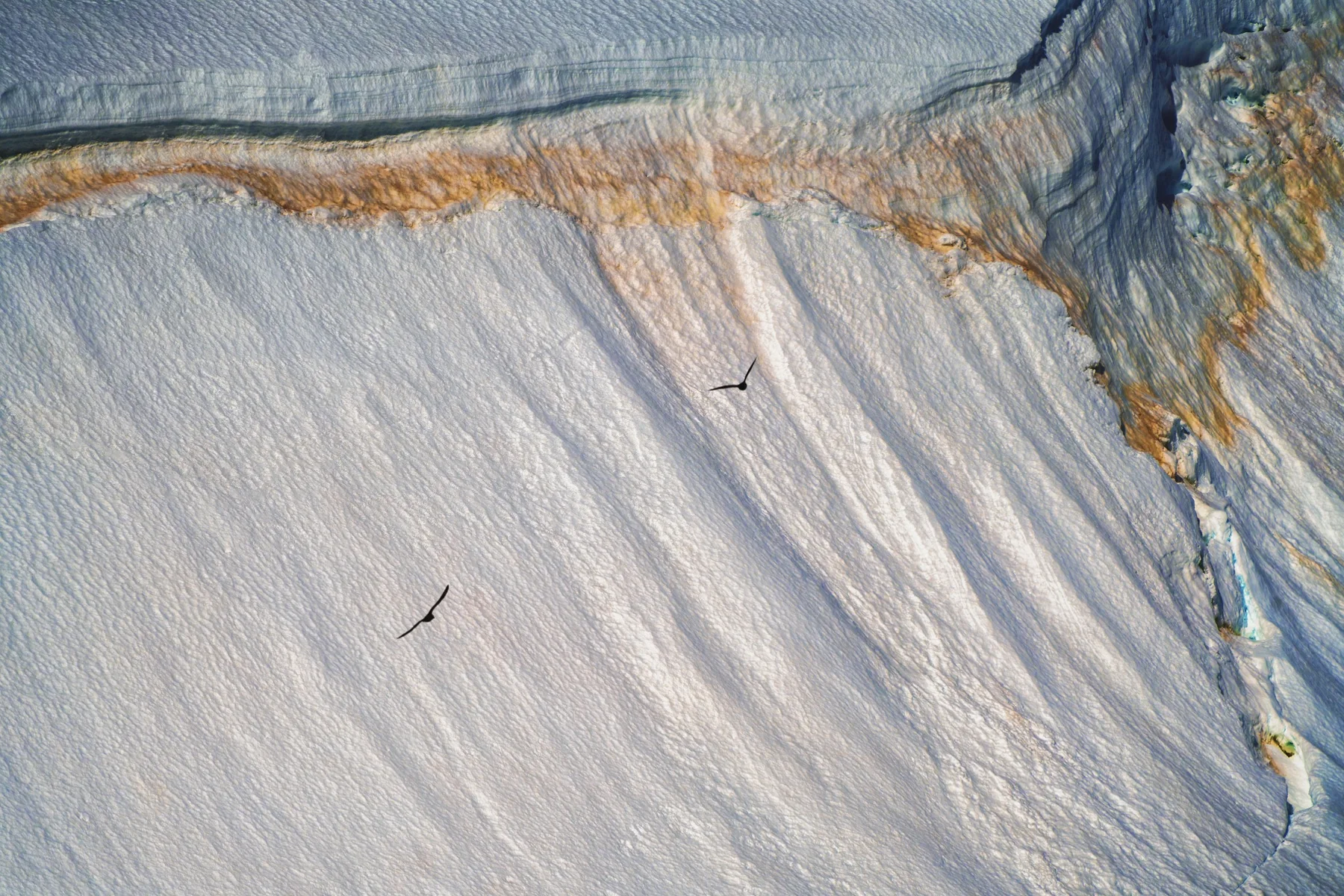
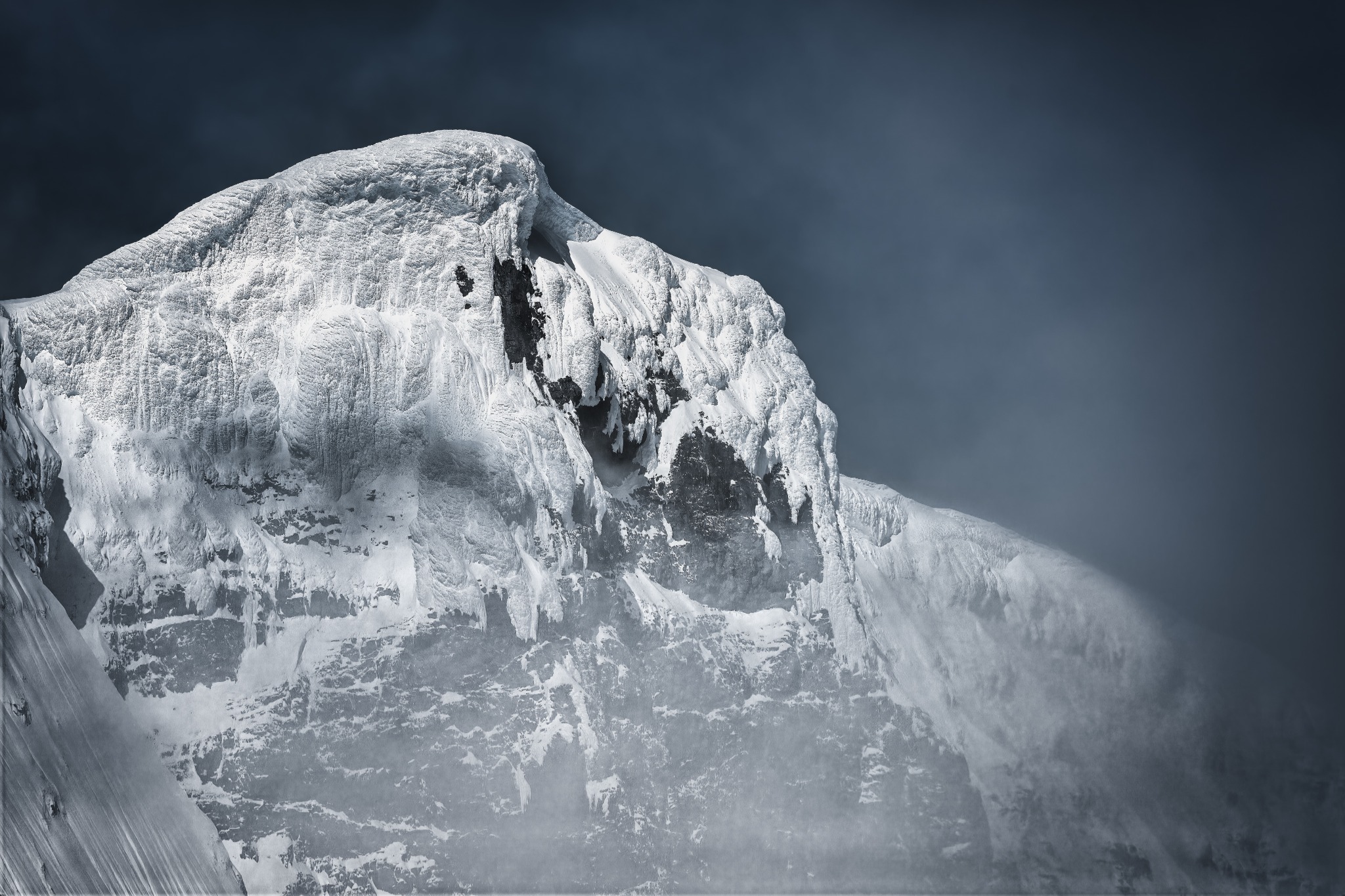
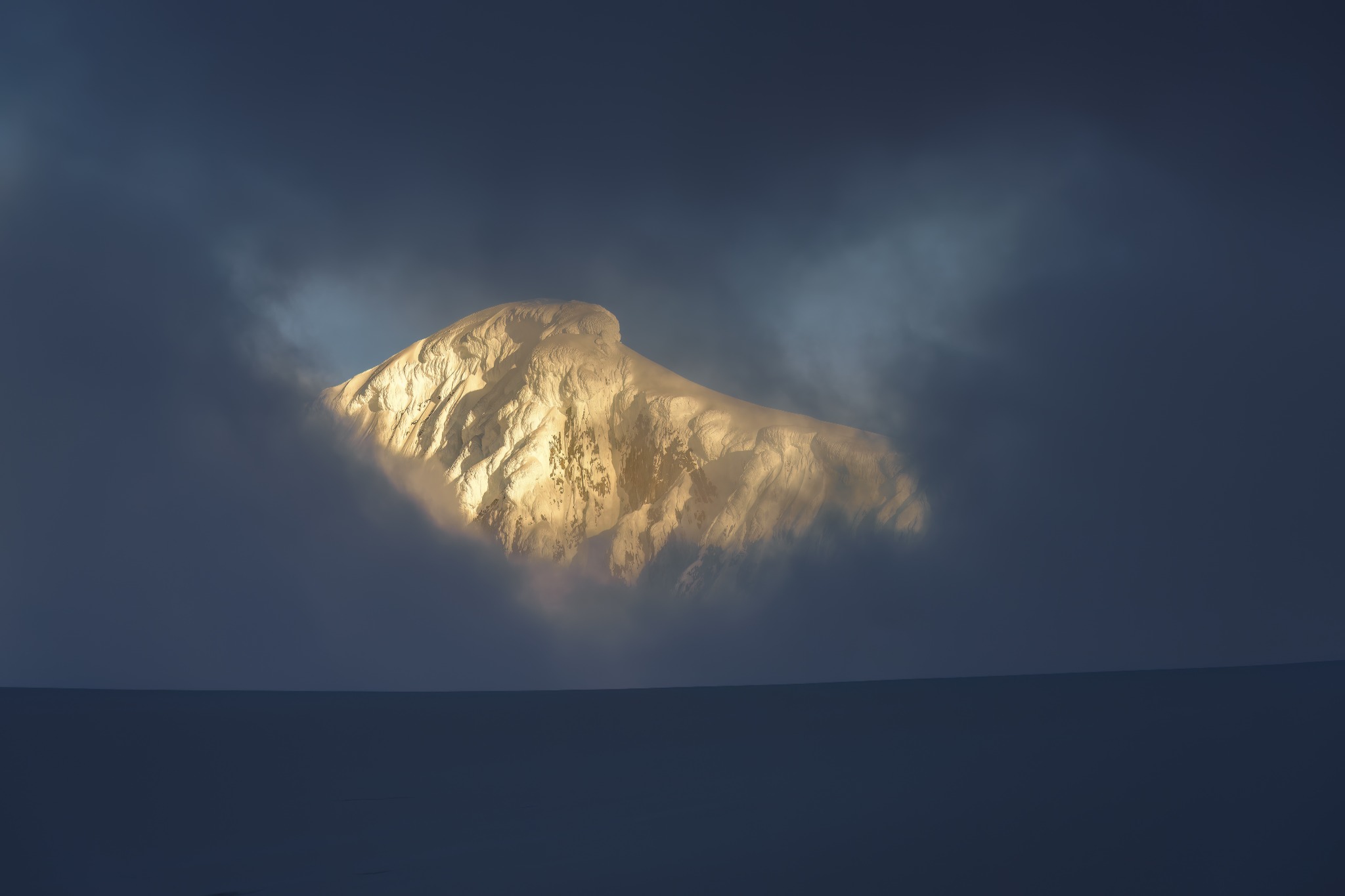
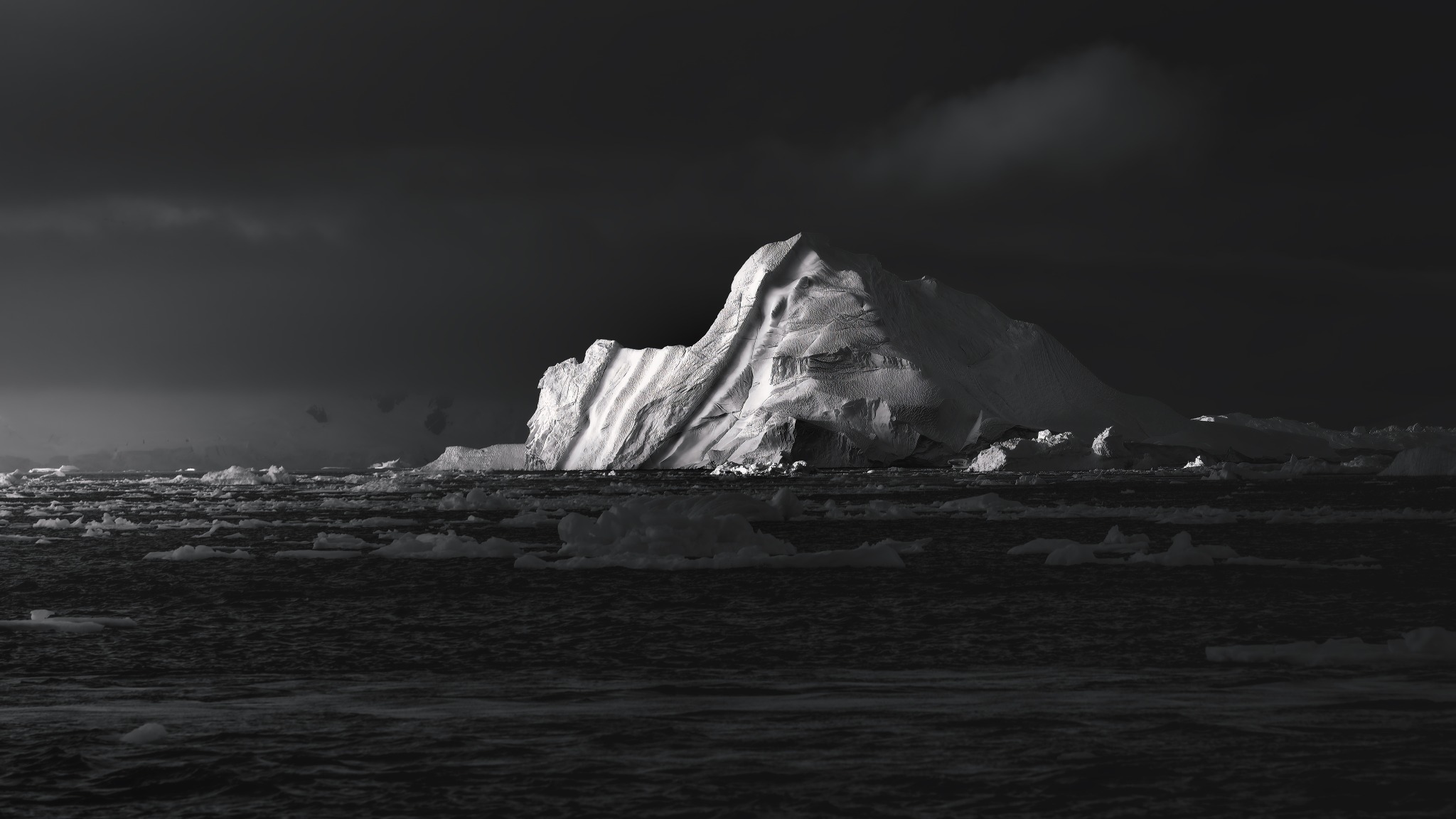
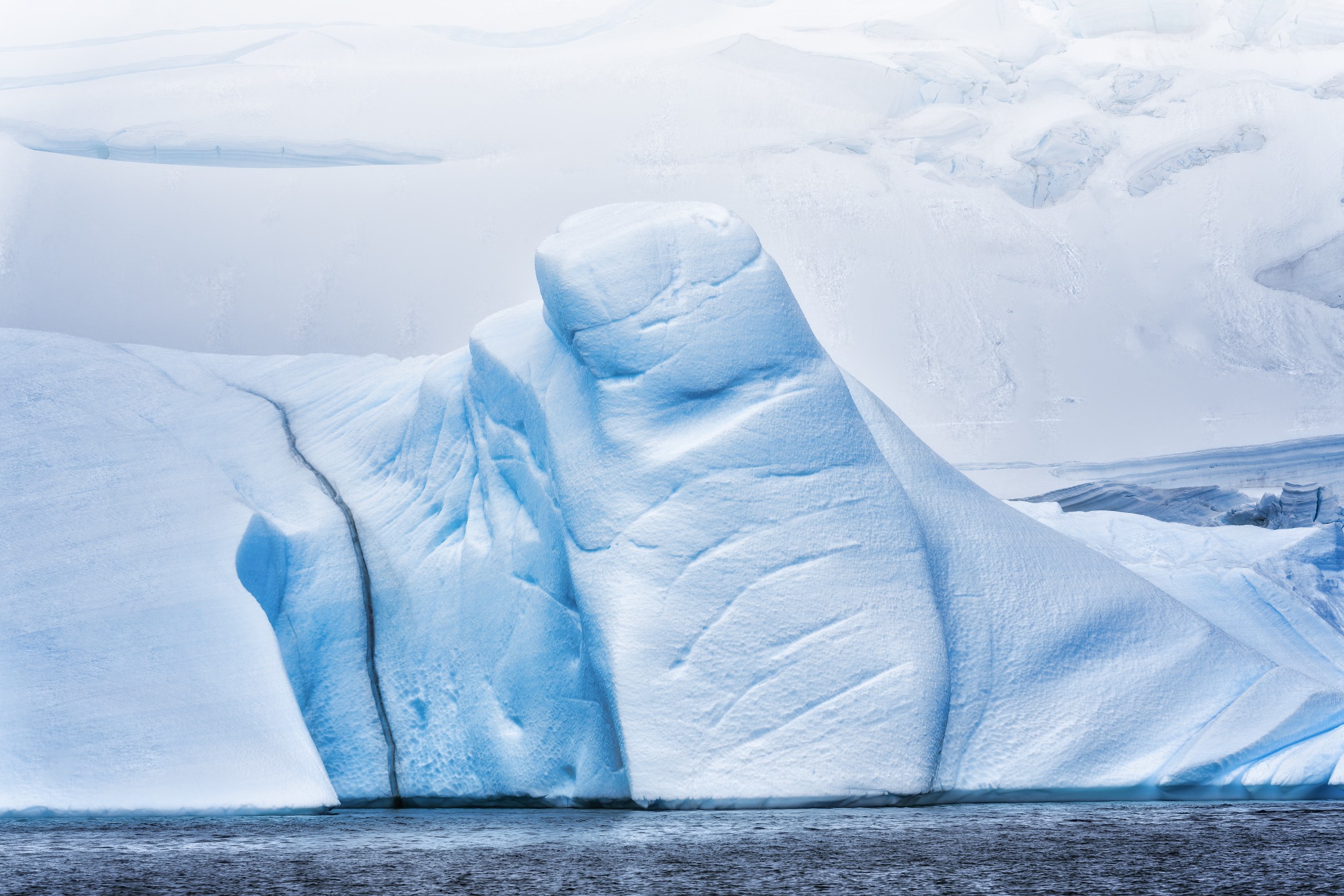
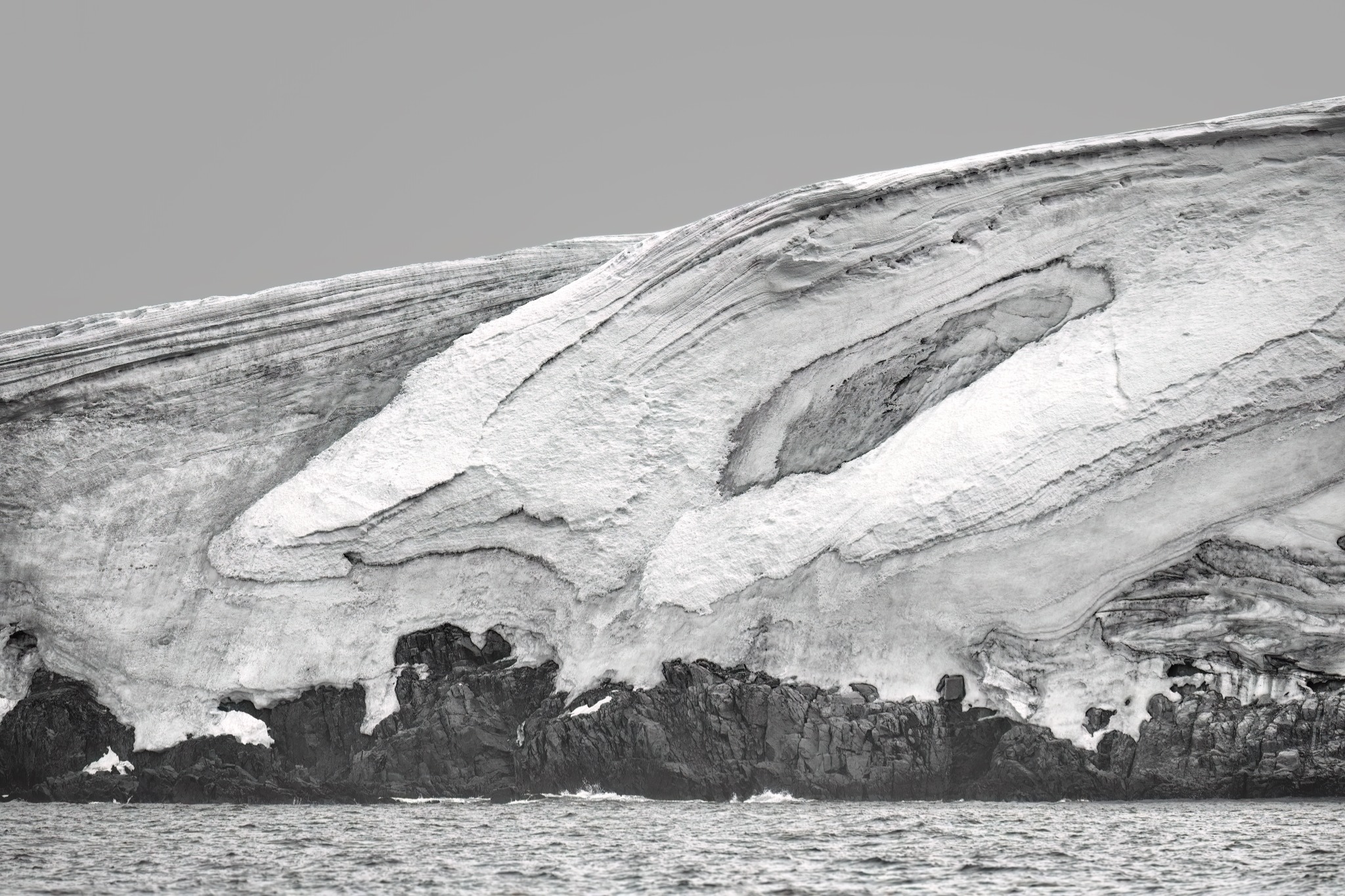
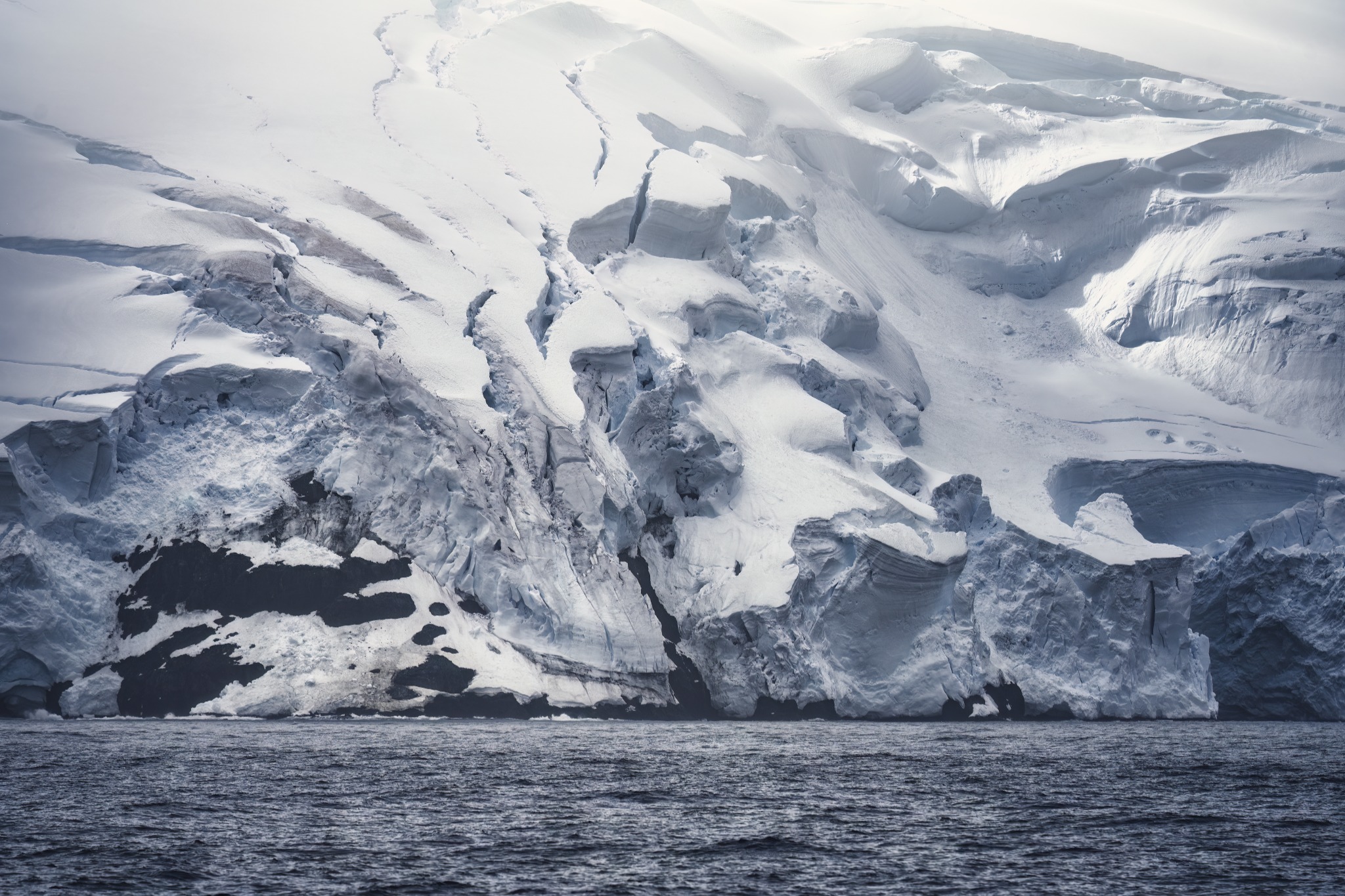
It appeared in the layers of ice, in its cracks, in the colours emerging beneath the white, in forms that slowly come into being and disappear. Every iceberg contains a history far older than ourselves.
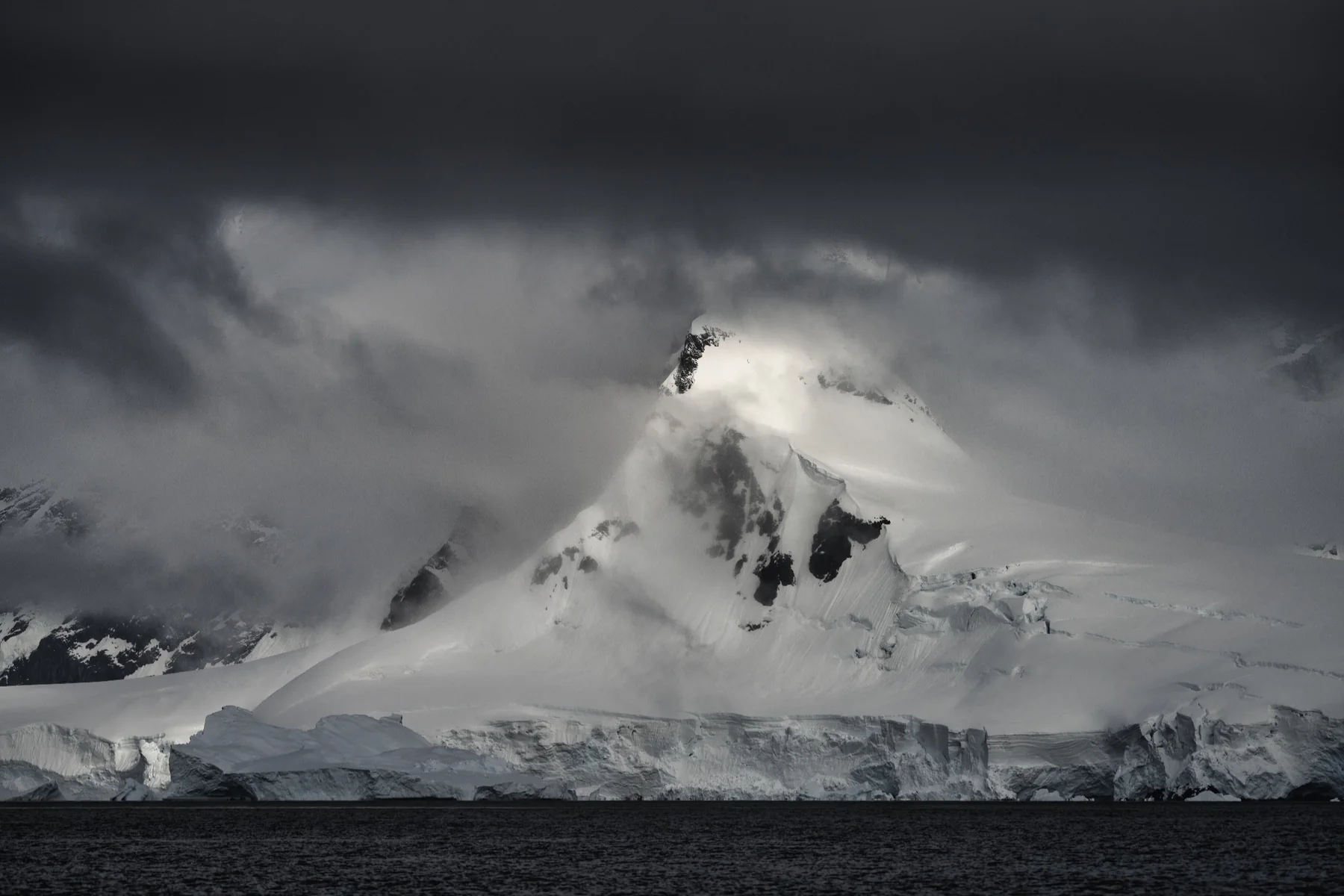
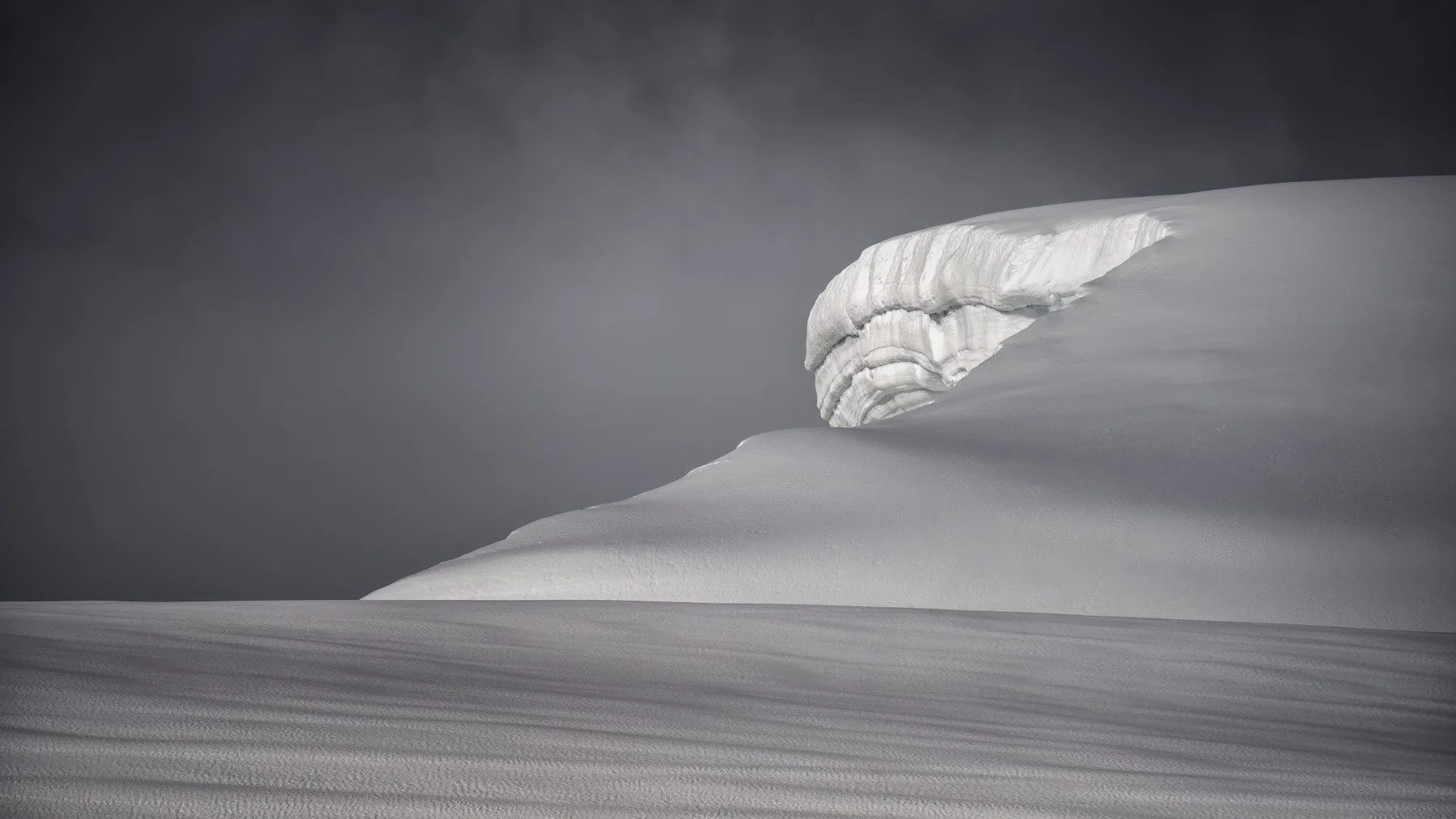
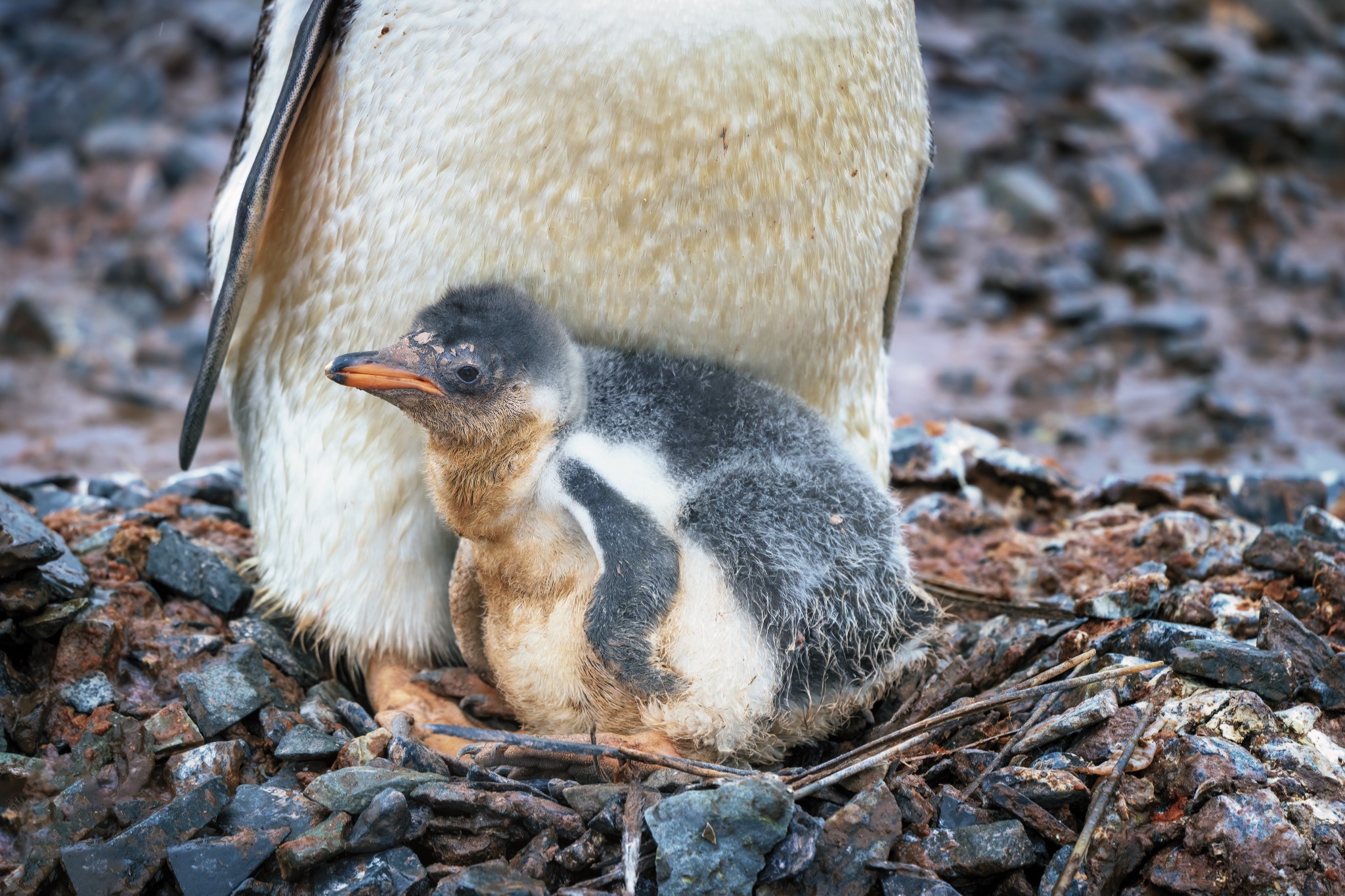
During the journey, my way of looking began to change. Immensity led me towards detail. I stopped seeing only mountains, glaciers and icebergs. I began to see traces.
Beyond Time was born from that encounter: the experience of entering a landscape where time becomes visible and the human being understands, for an instant, their true scale.
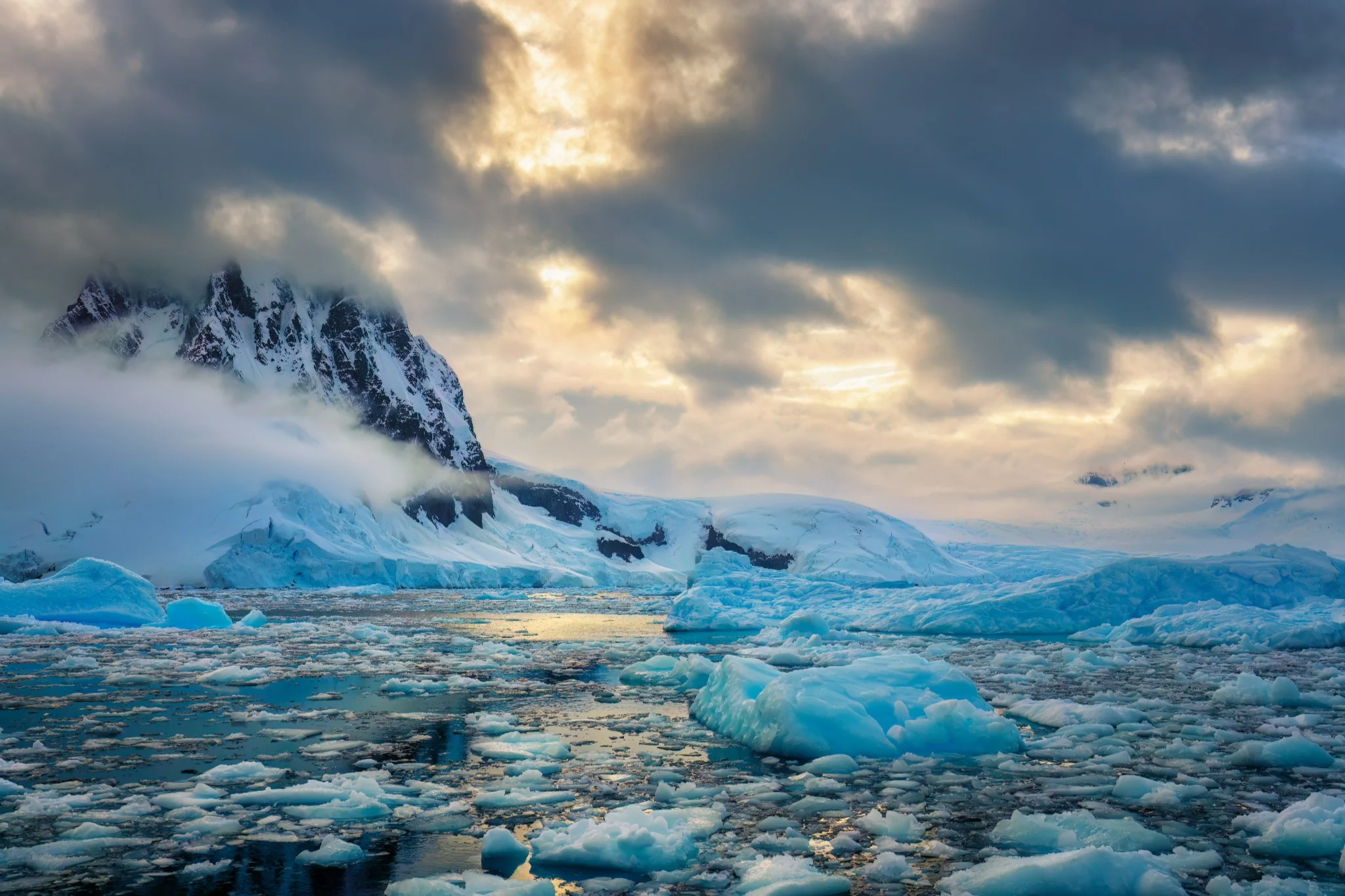
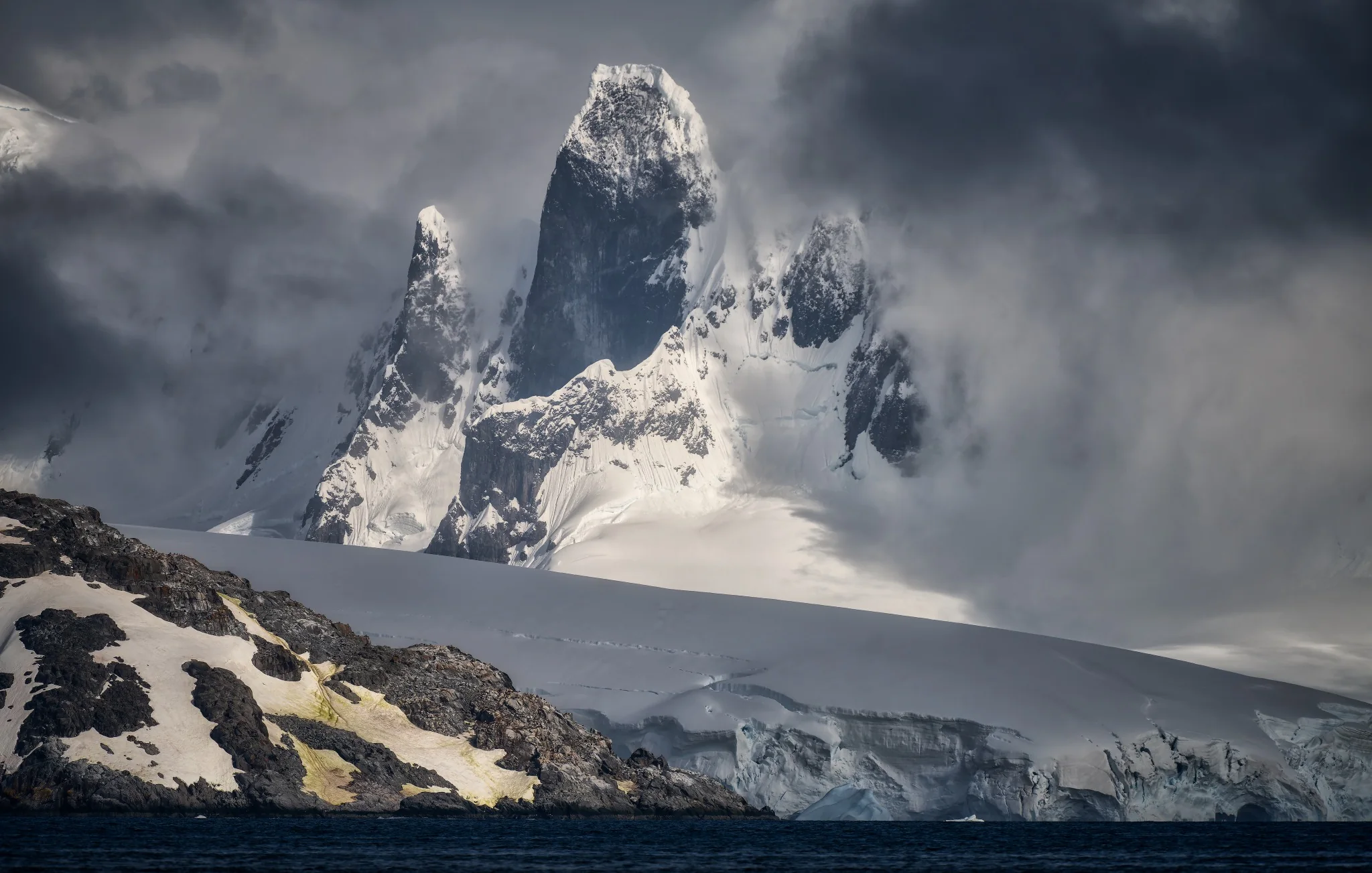
Antarctic
Archive
Twenty-six days before a substance that changes without ceasing to be ancient.
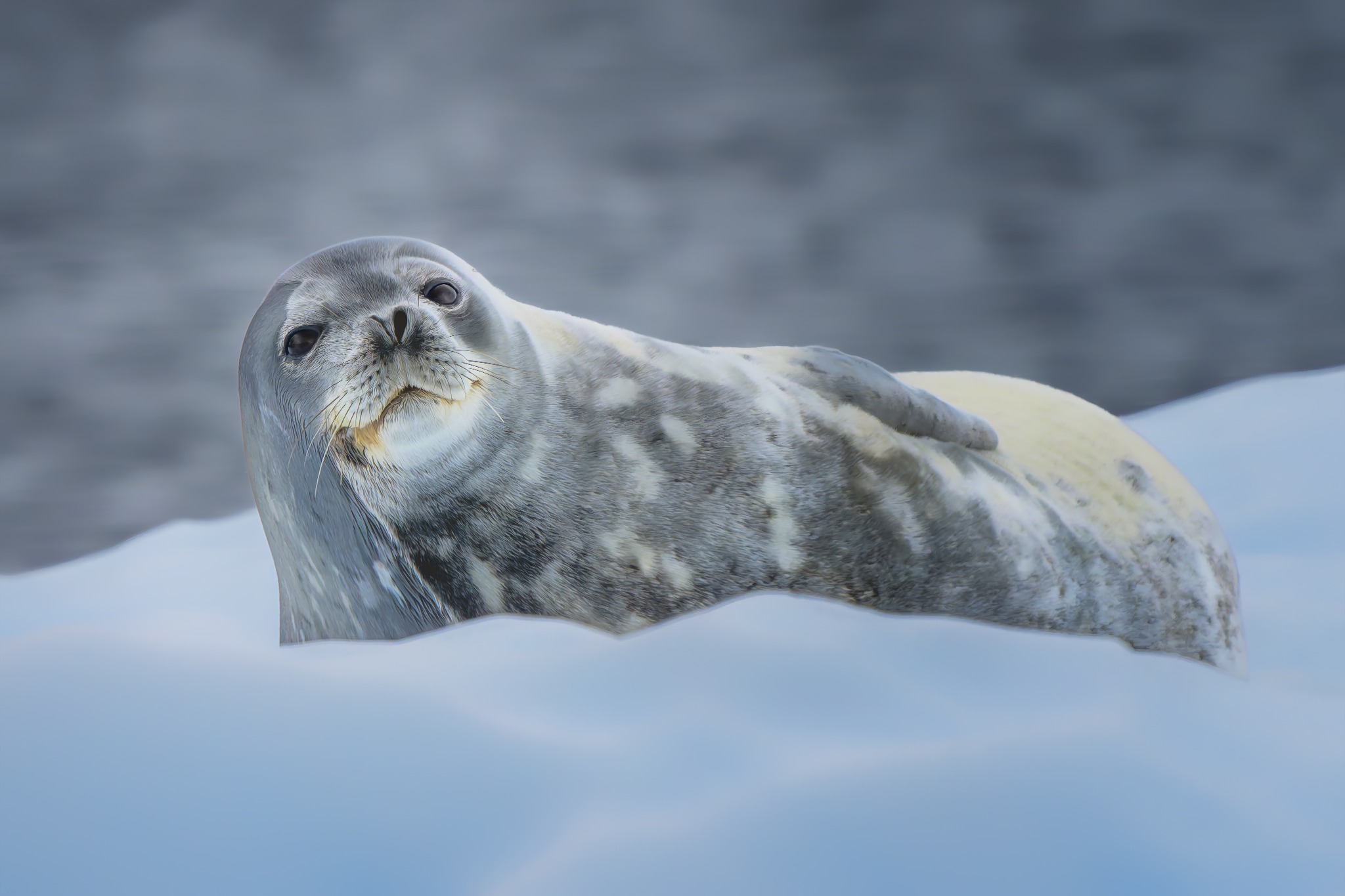
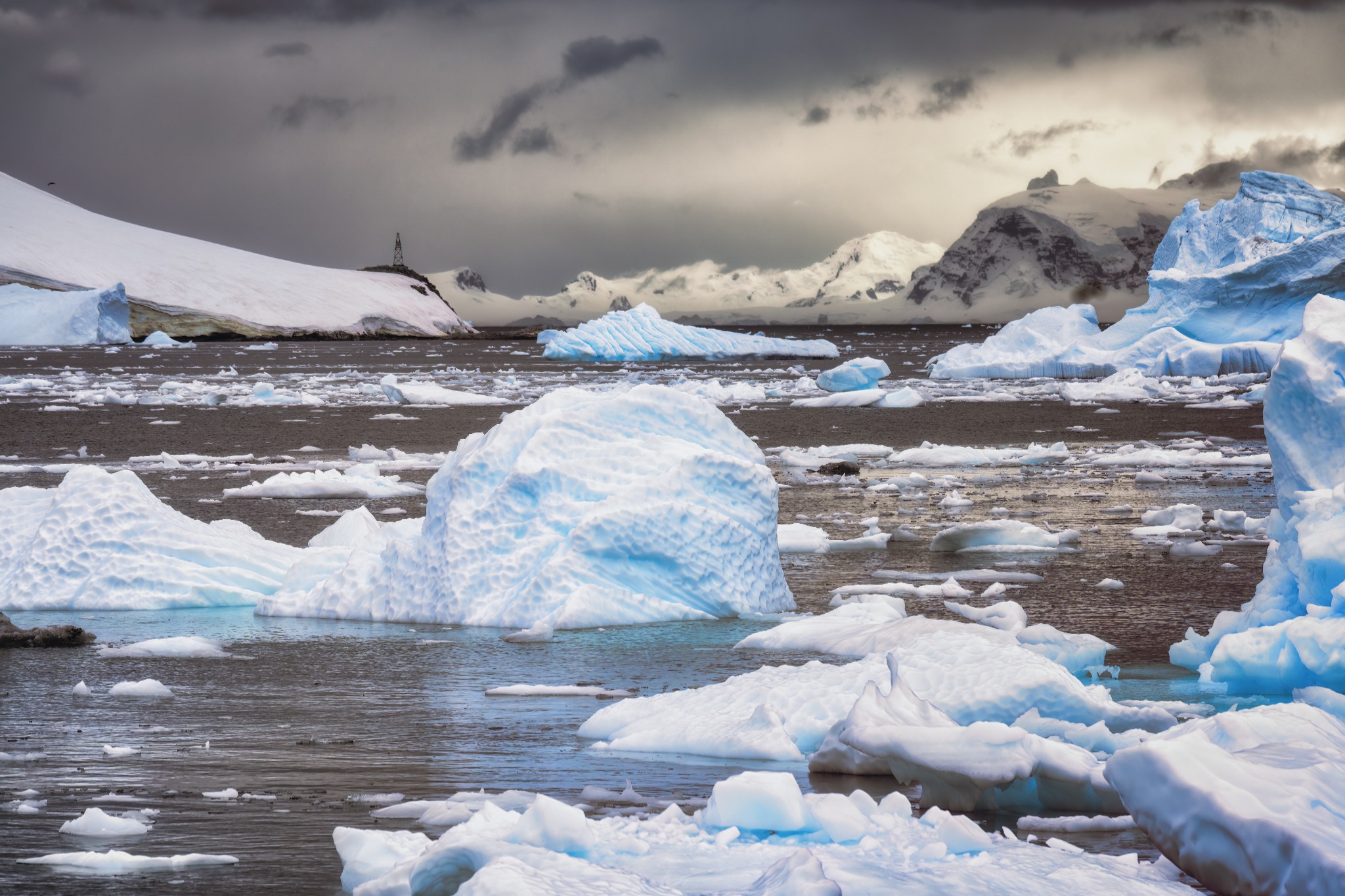
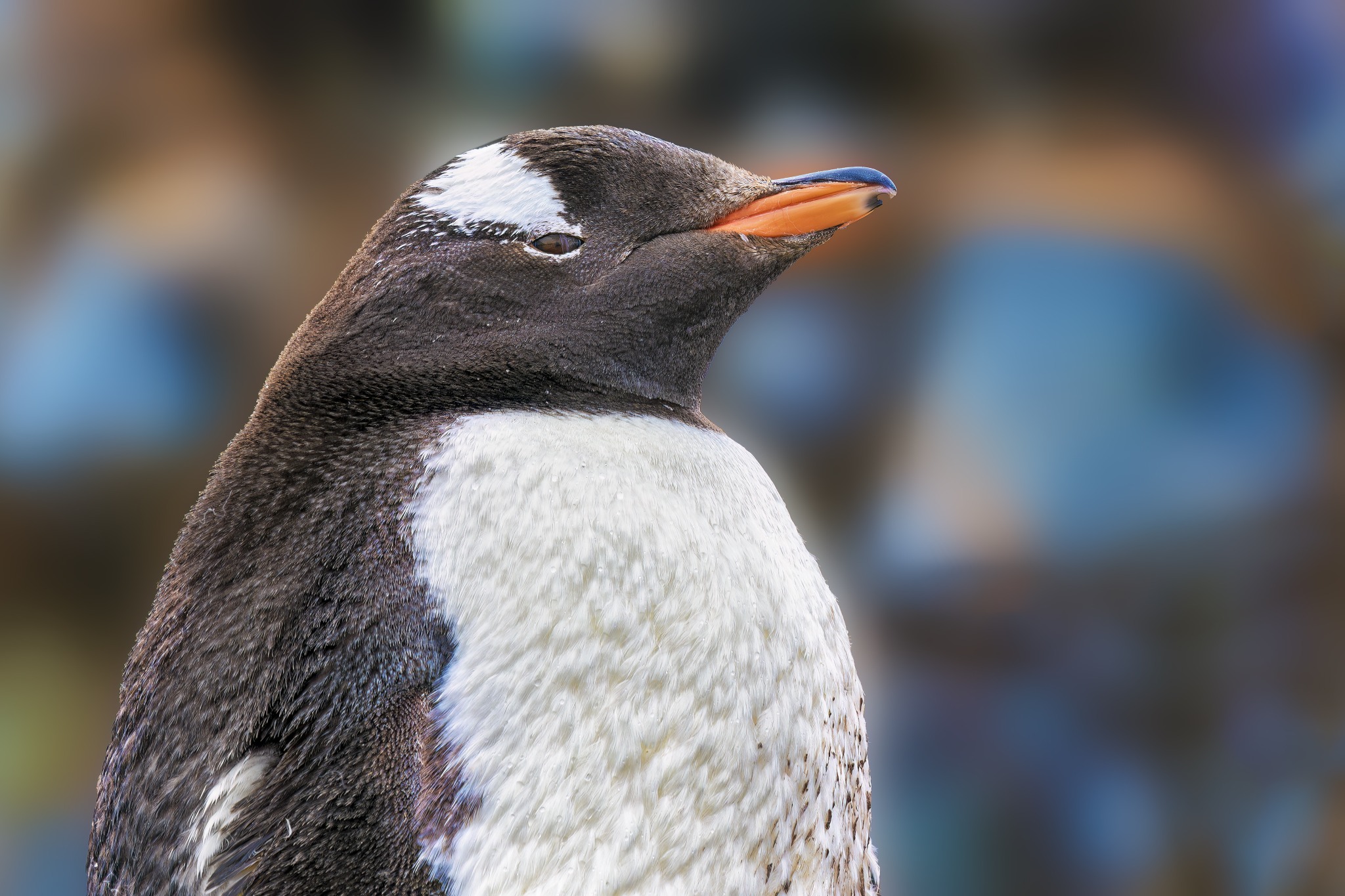
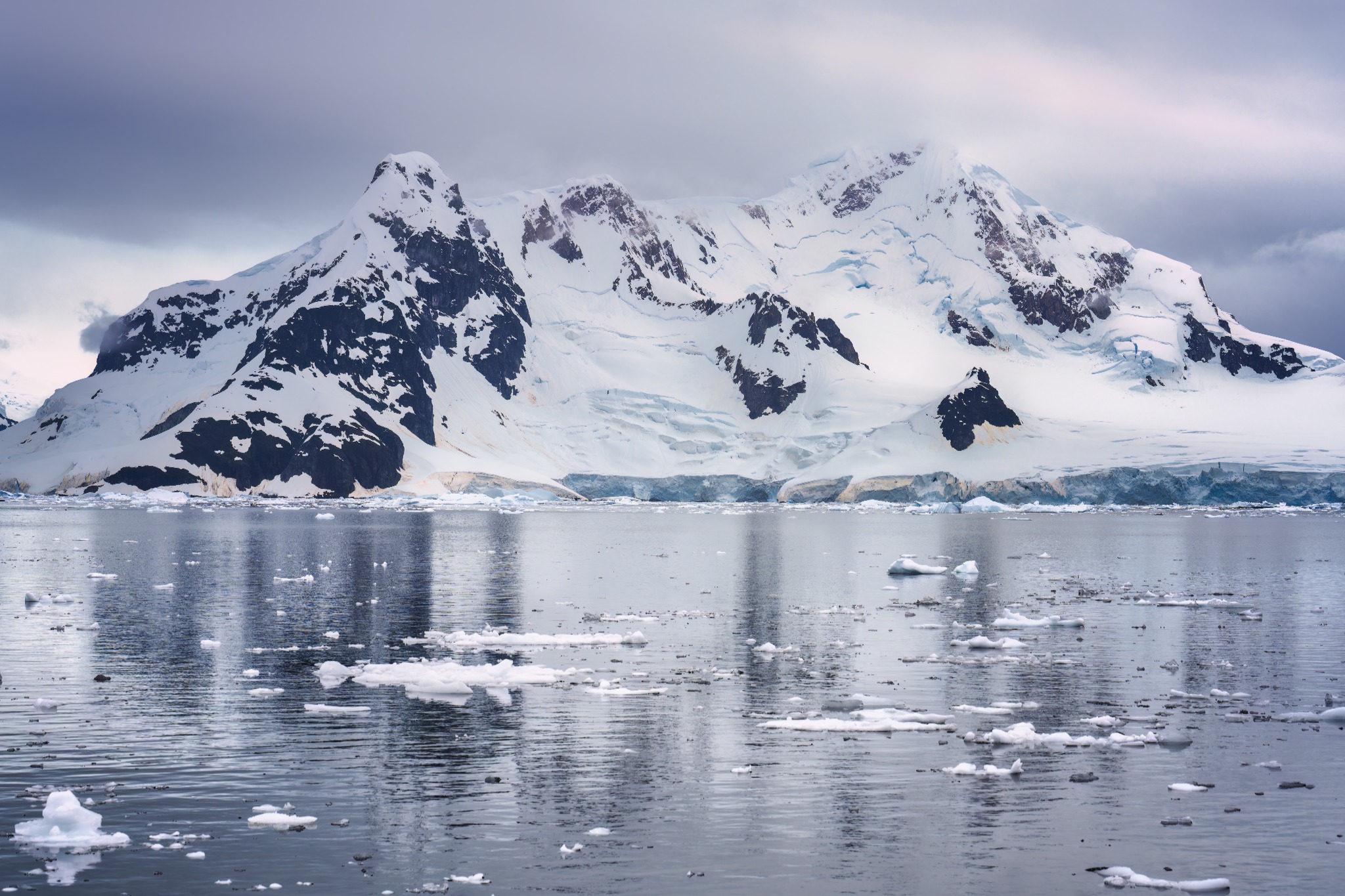
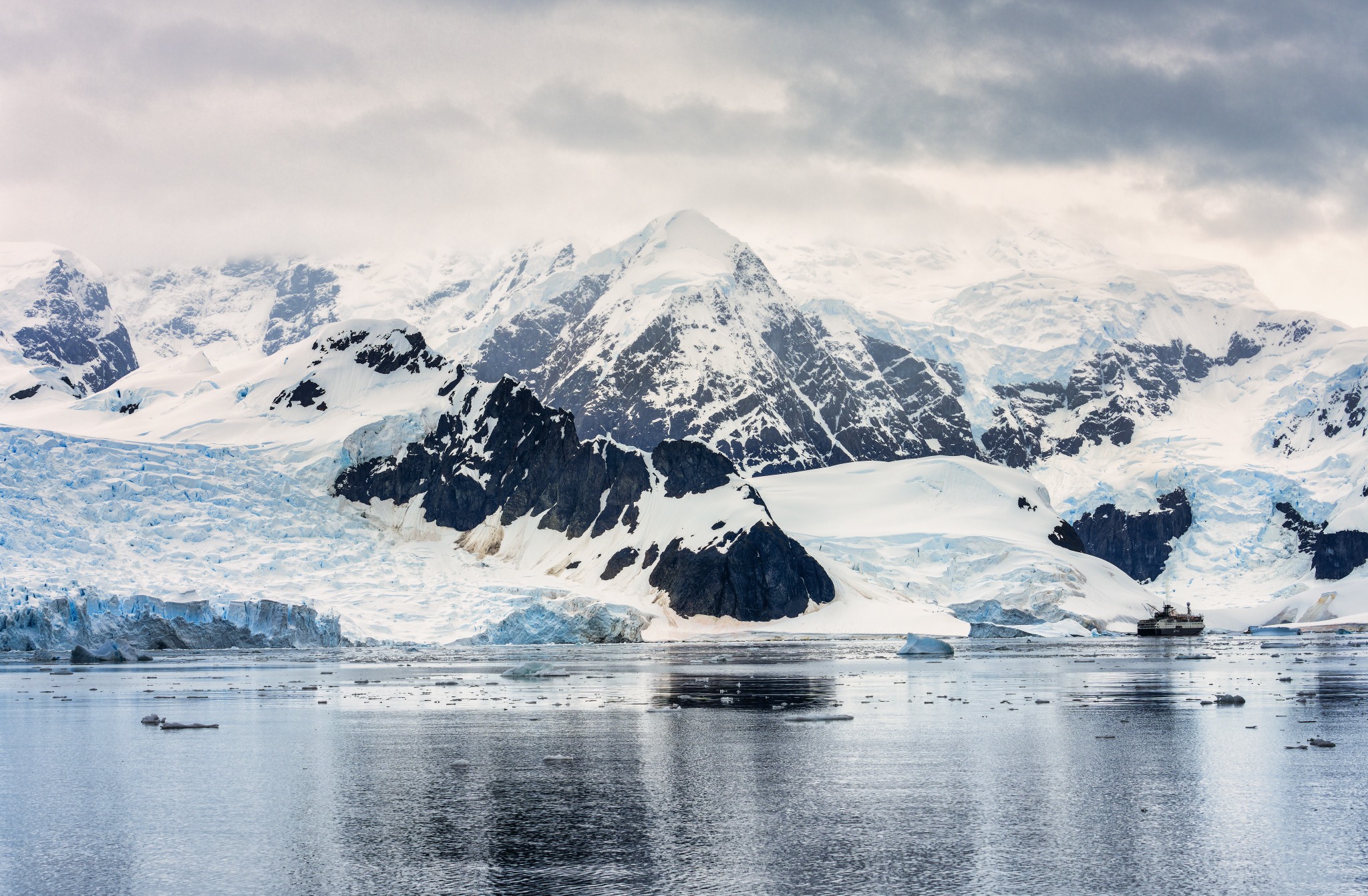
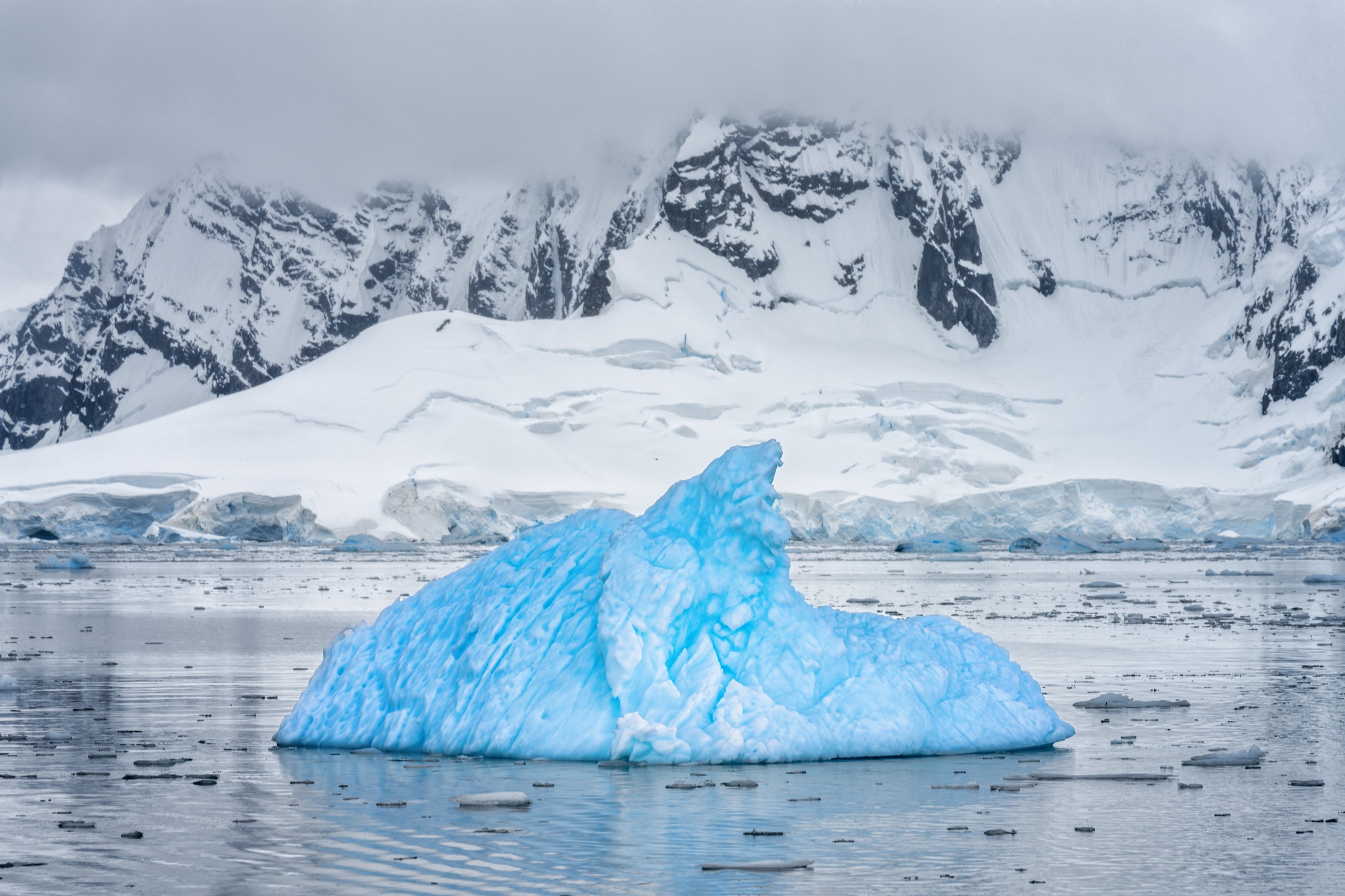
The end of the world and the beginning of another way of seeing
My relationship with this journey began long before reaching Antarctica. In January 2016 I sailed to Cape Horn for the first time and met Eric, captain of the Sonabia. Until then, the sea had been a distant territory to me. I came from the mountains, from walking them since childhood, learning their changes, their risks and their way of ordering the world. But that voyage opened another door. From that moment I began to imagine a journey still farther south.
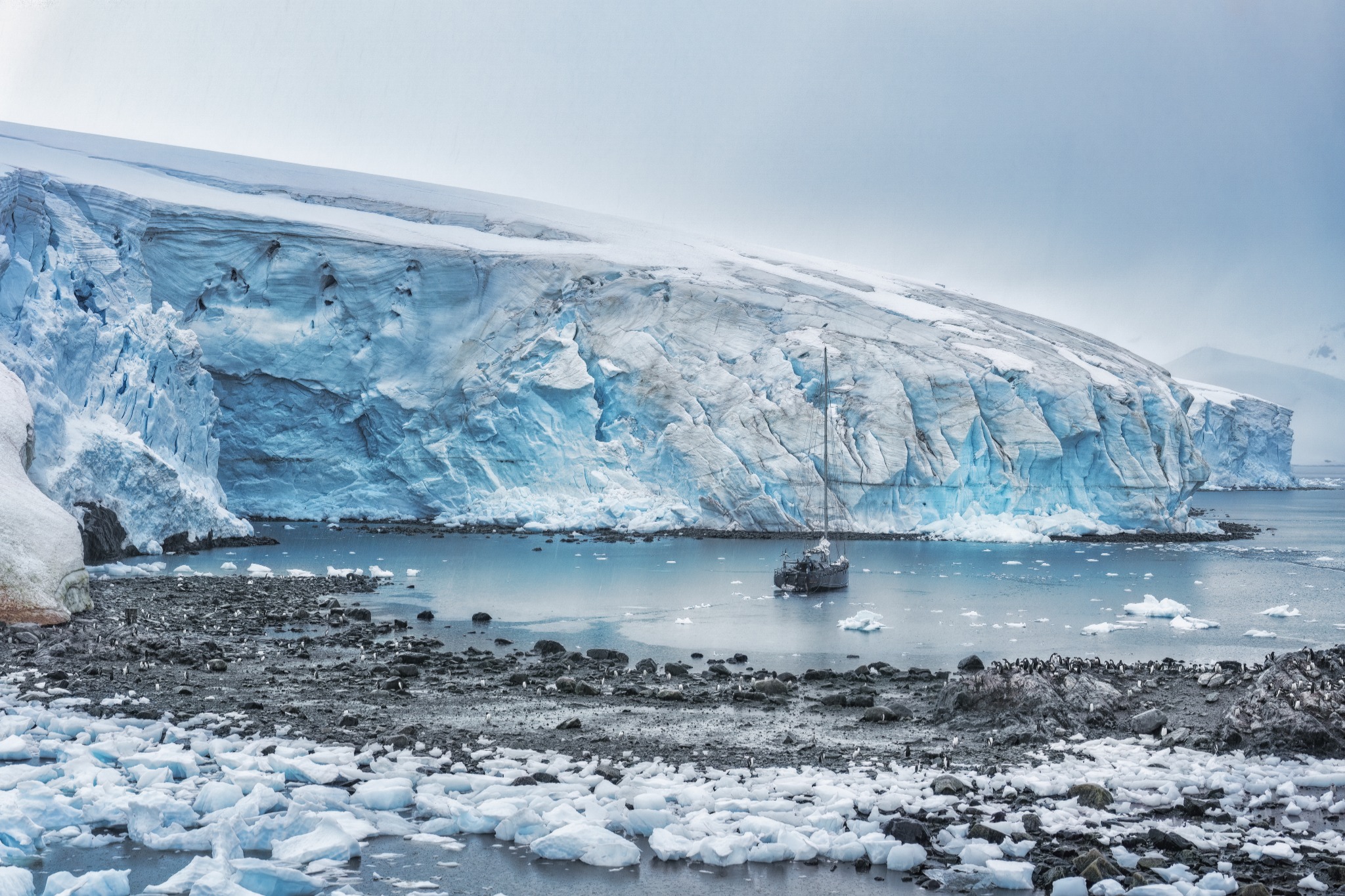
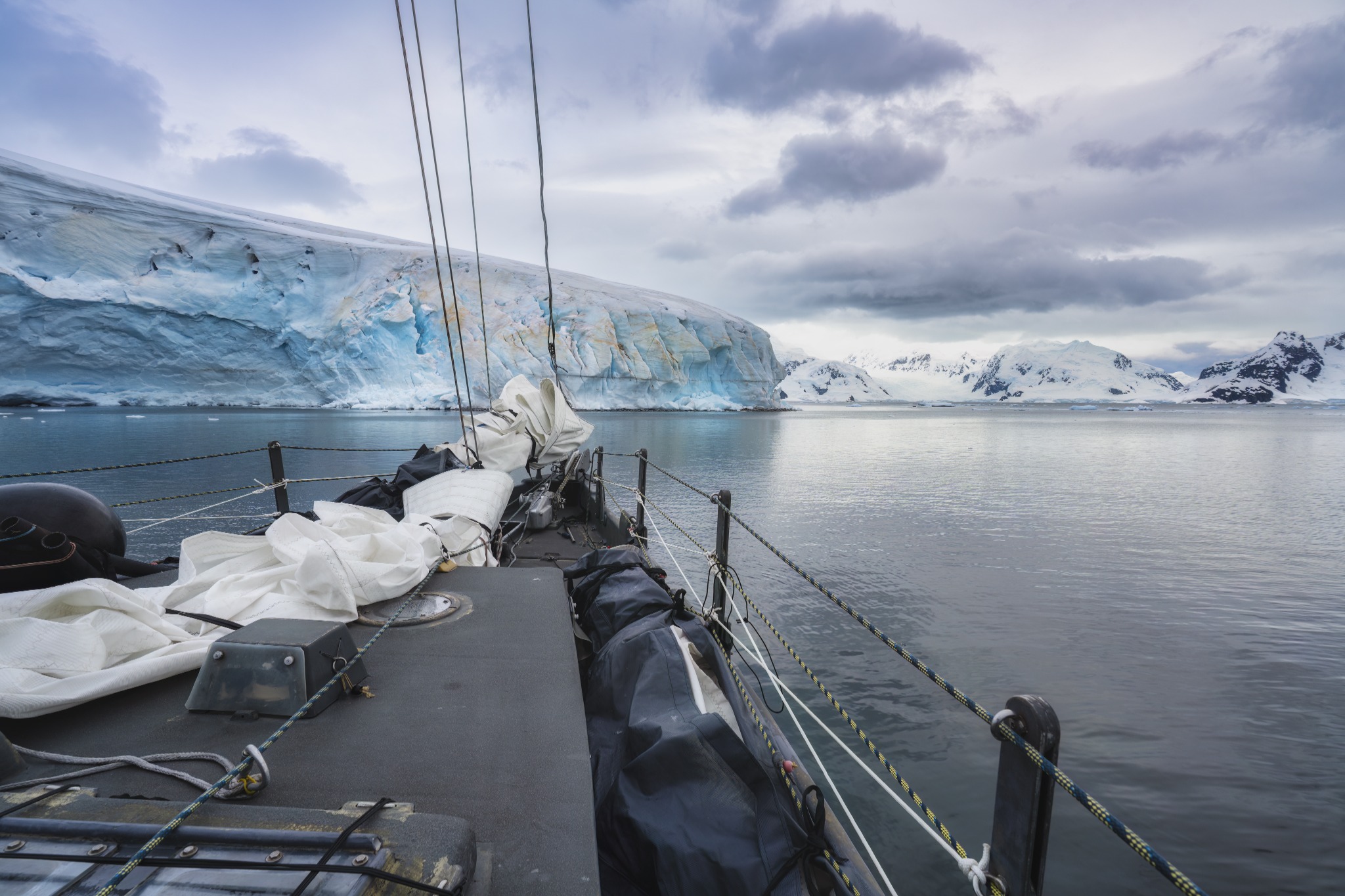
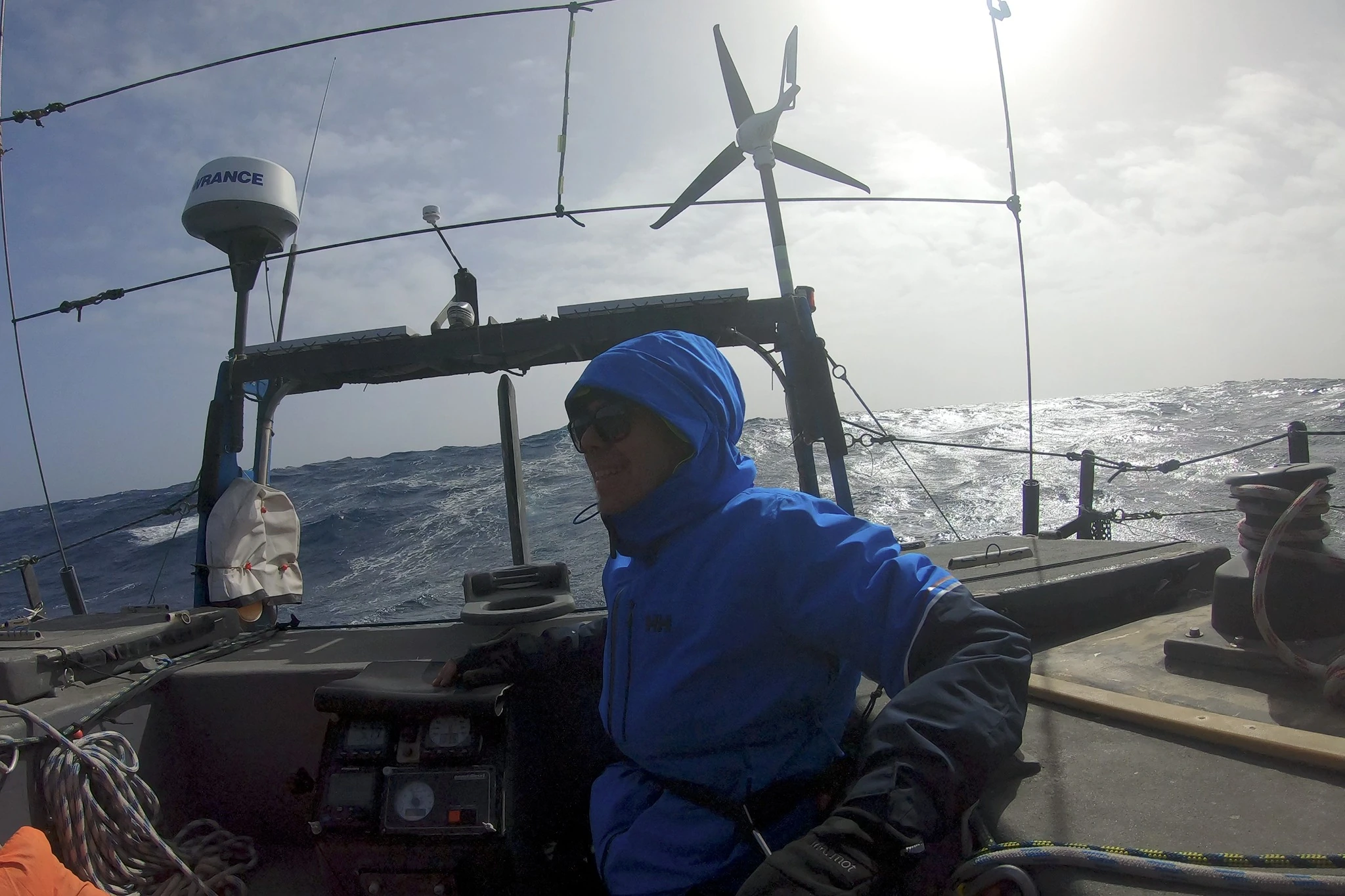
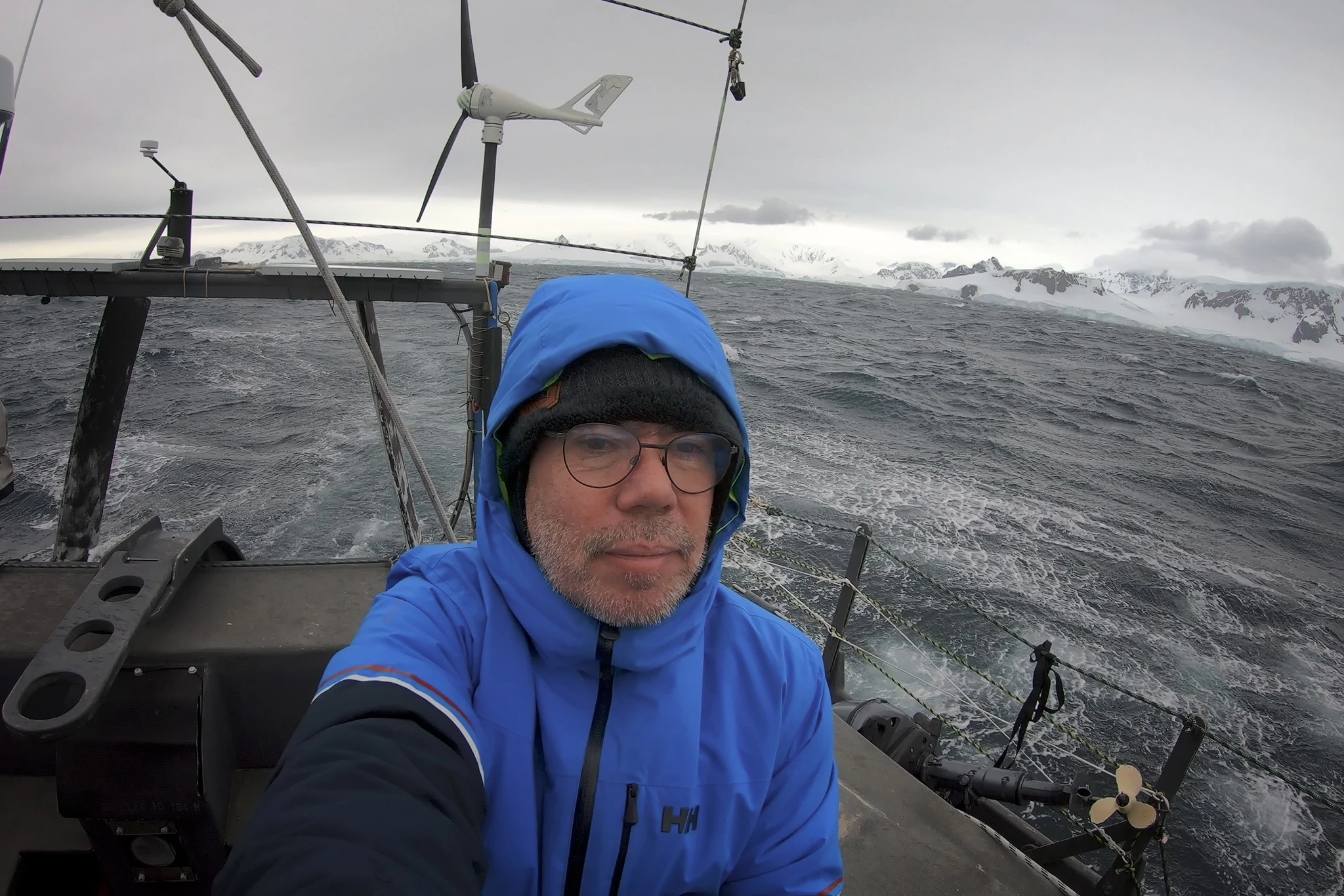
The dream took seven years to become real. In February 2023 we sailed from Puerto Williams aboard Sonabia II. Six people shared a small space on a fifteen-metre sailing yacht for twenty-six days before an immense geography. We crossed the Drake Passage, sailed among ice and returned along a route where the weather never stopped reminding us who was truly in control.
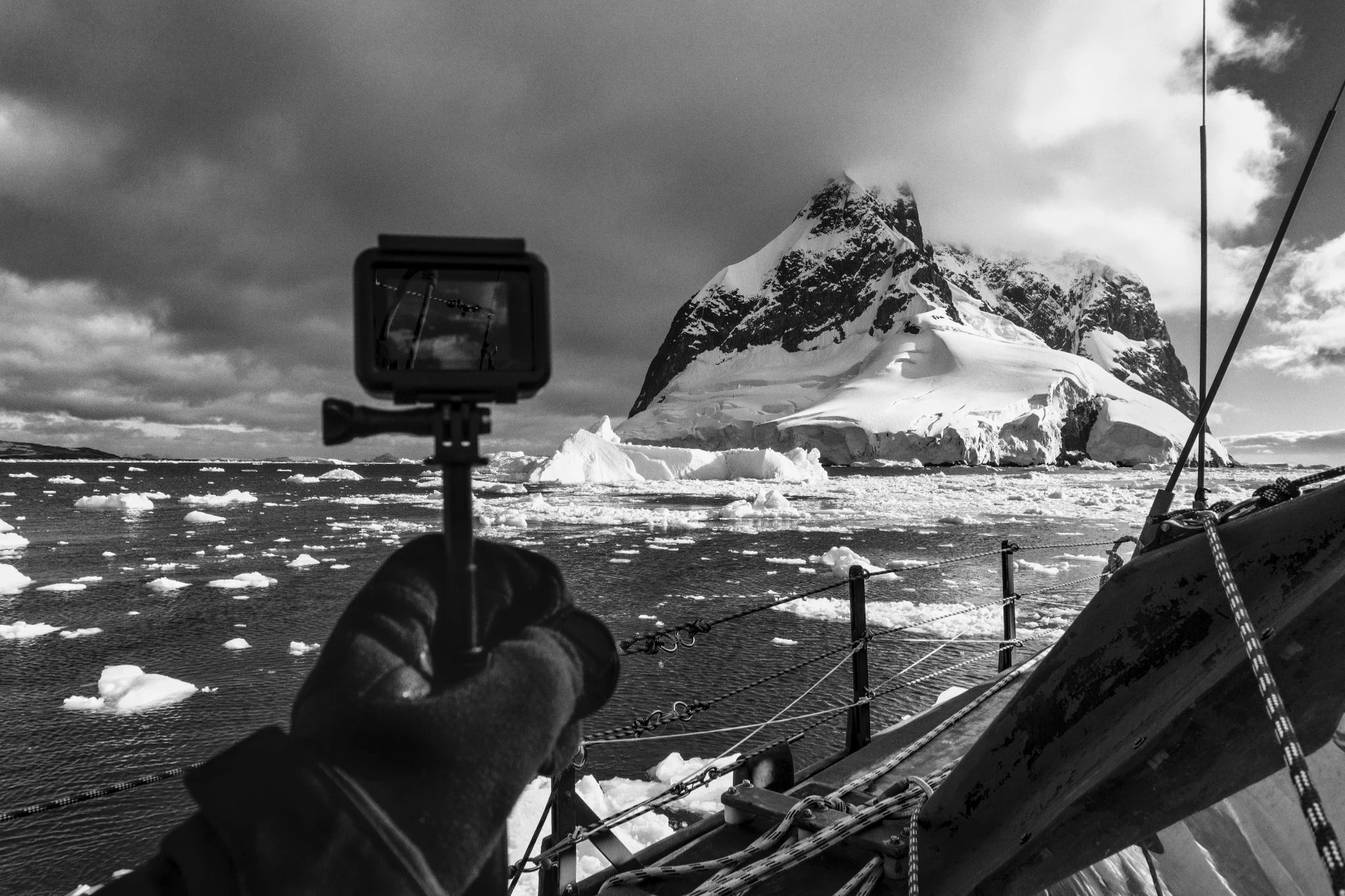
Preparation had begun almost a year earlier. I checked equipment, clothing, medicines and cameras again and again. I took more than I needed, probably because planning was my way of facing fear. Alongside the digital cameras travelled two analogue cameras and a handmade logbook. Something in me needed to return to a slower photography, without a screen or immediate confirmation. To look, decide and accept that the image would remain invisible until much later.
Travelling to Antarctica by sailing yacht was not merely a way of arriving. It meant living within the journey: feeling the constant motion of the sea, hearing the wind against the vessel and, once in Antarctic waters, listening to fragments of ice brush against the hull. There was no comfortable distance between us and the landscape. We were exposed to it, traversing it and being traversed at the same time.
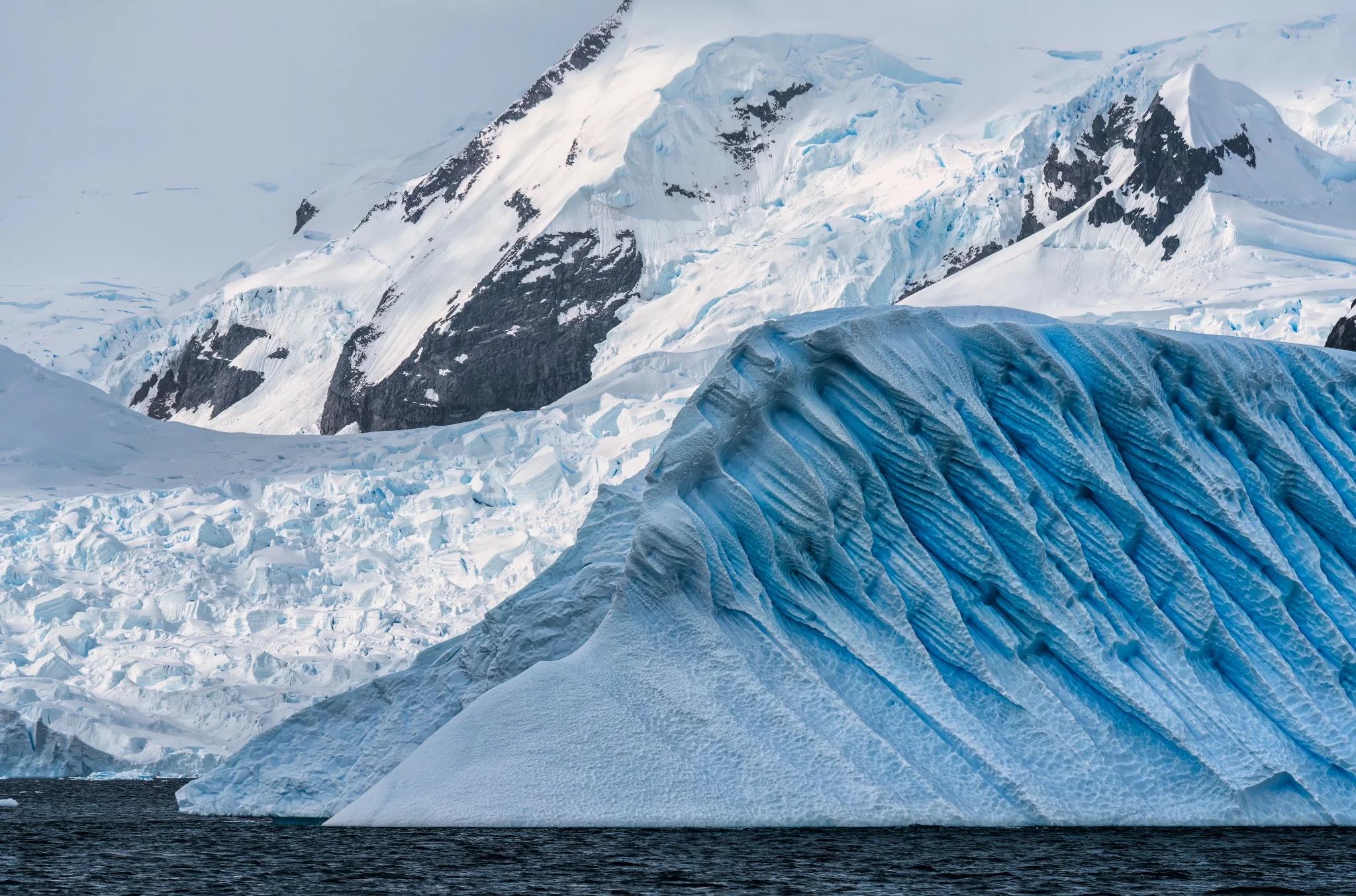
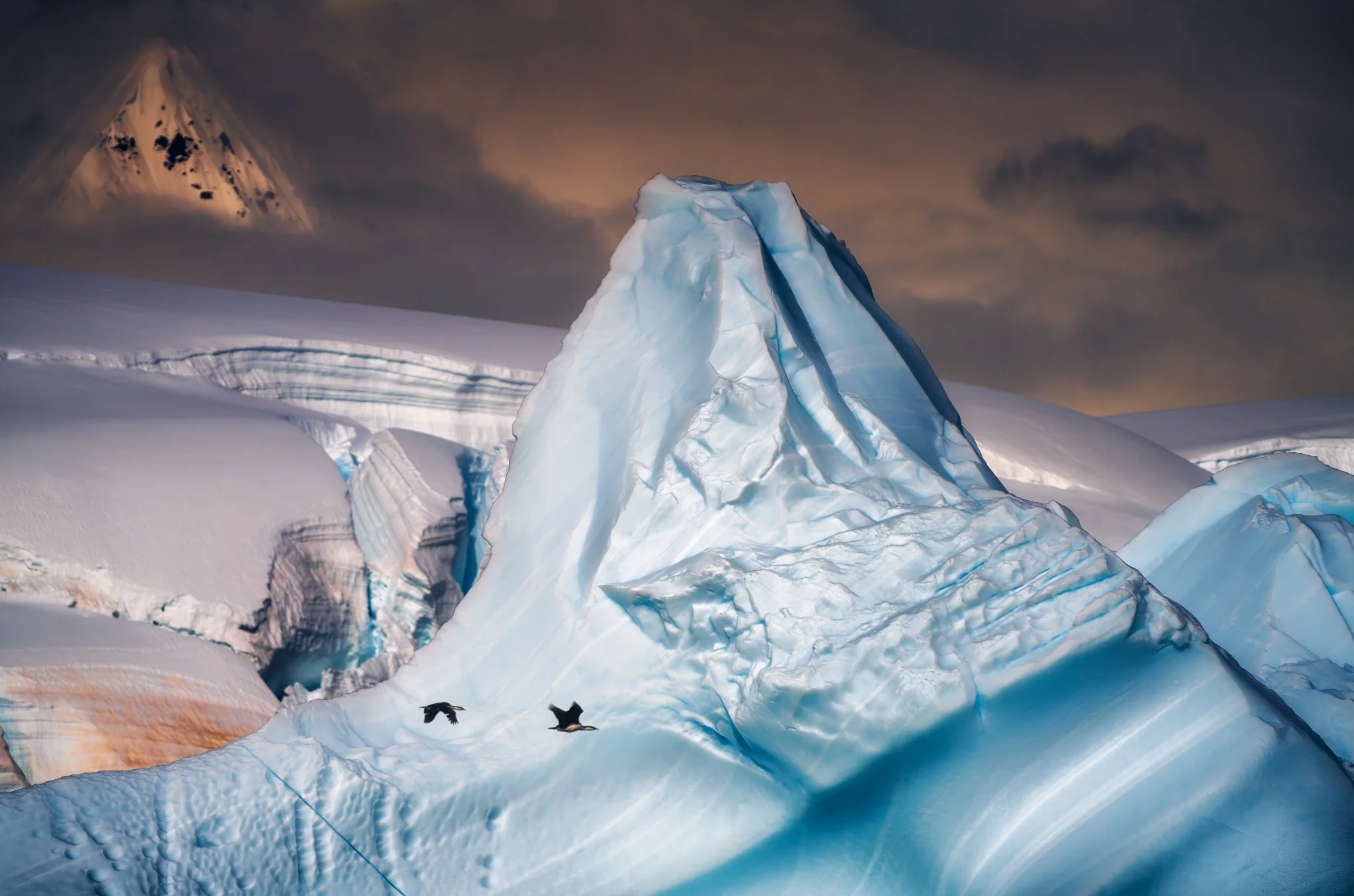
When the first mountains of the Antarctic Peninsula finally appeared, I was tired after several days at sea. Yet seeing that geography open before us was enough for the body to awaken again. Antarctica was neither flat nor entirely white. There were blues that seemed to come from within the ice, mountains rising directly from the sea and forms unlike any familiar landscape.
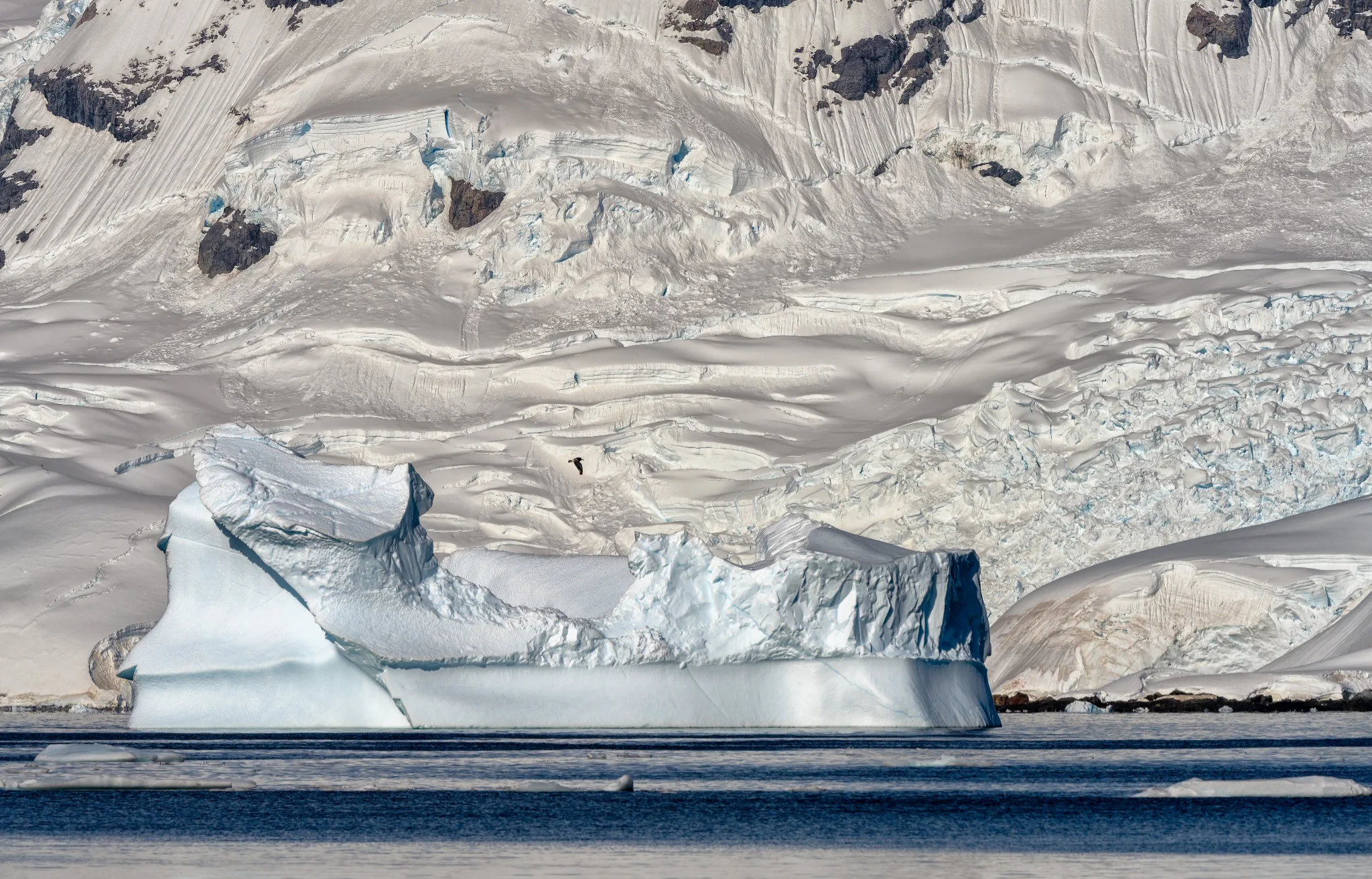
During the first days I photographed immensity. I wanted to understand the scale, to account for glaciers and mountains that seemed endless. Little by little, something began to change. My gaze stopped seeking only the monumental and drew closer to cracks, layers and colours hidden beneath the white. I stopped seeing only great masses of ice. I began to see traces.
That change happened slowly, almost without my noticing. Antarctica ceased to be a place I had reached and became a question. How long had each of those forms remained there? What history could a drifting fragment of ice contain? What did it mean to stand before a natural memory far older than ourselves?
After returning, it took me almost a year to review the material. I followed the journey day by day, as if sailing it again. During that edit I understood that my photographs had also changed along the way. The first looked outwards; the last seemed to be searching for something deeper.
We spent twenty-six days at sea and, on returning, I understood that there are landscapes from which one never fully comes back.
Back to the work ↑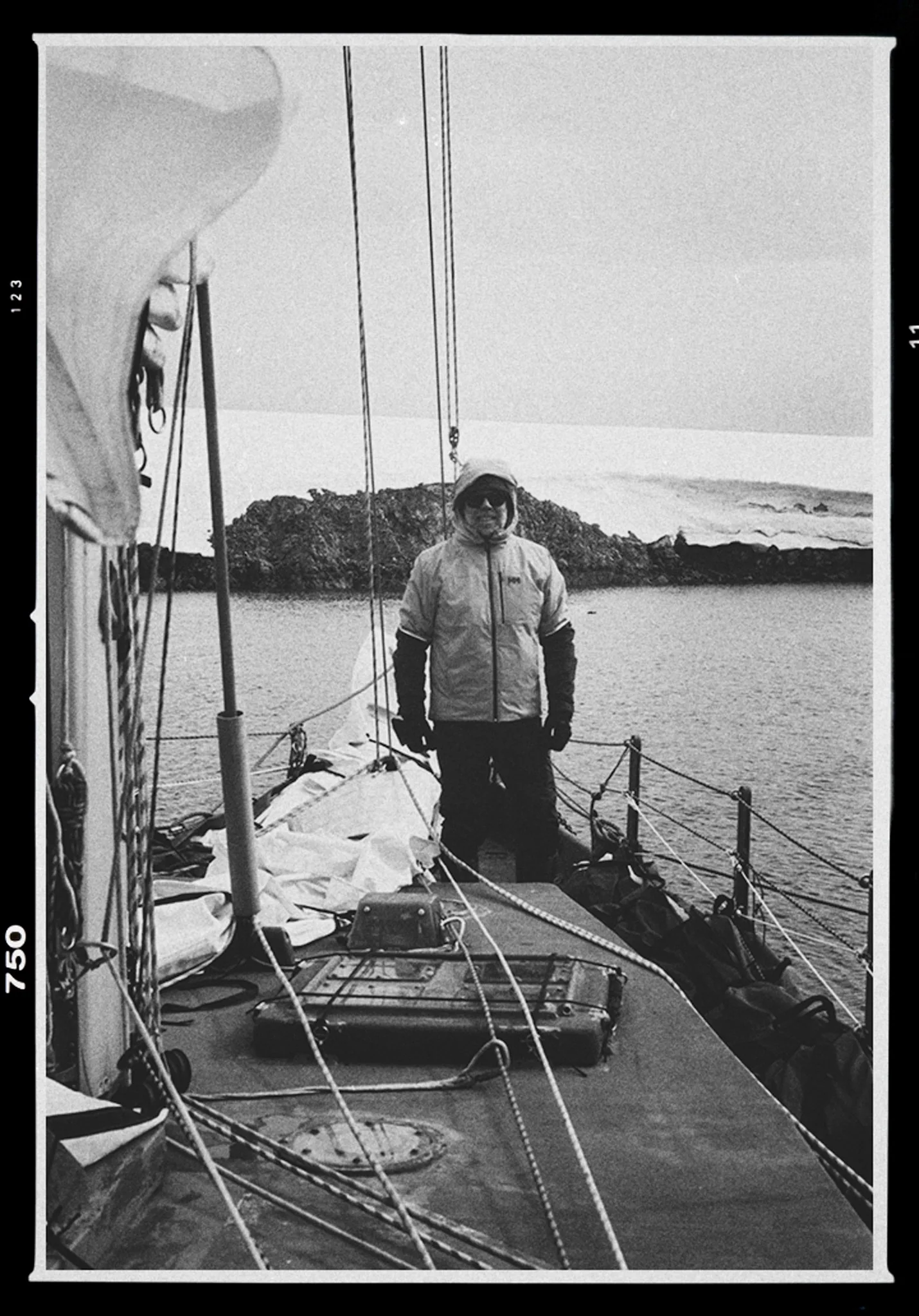
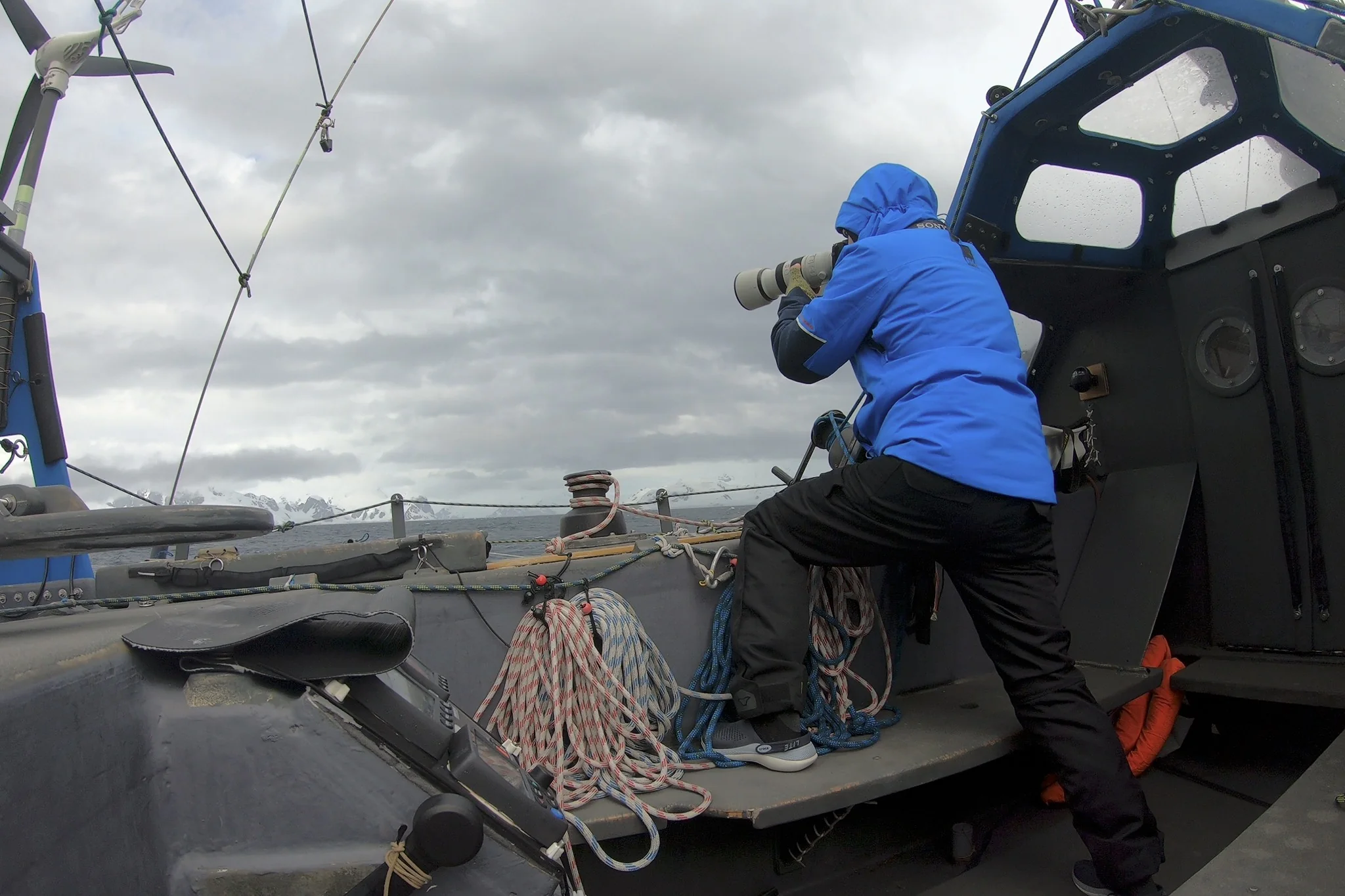
The journey behind the work
A film about the twenty-six days at sea that gave rise to this series.